David Birungi on Rewiring Trust: He Shares Airtel’s Take on Media, Governance and the Future of Communication
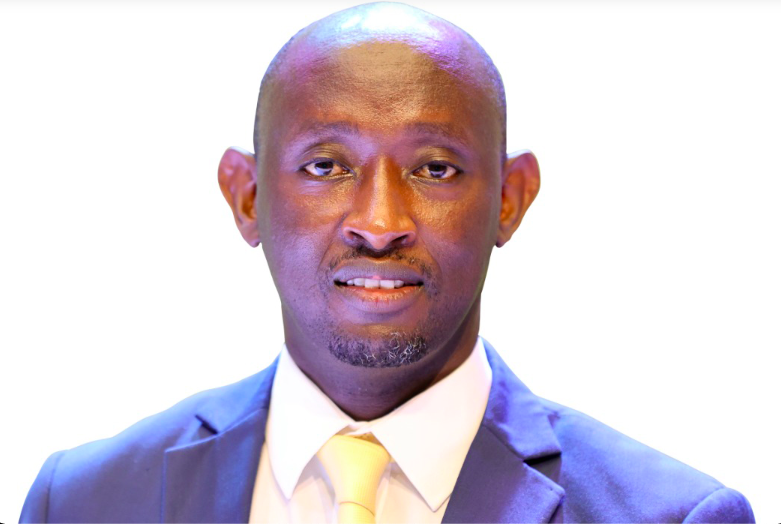
Over the years, Uganda’s media and telecom sectors have evolved side by side, shaped by rapid technological change and shifting patterns of communication. As the country’s pioneer network, Airtel has played a central role in expanding connectivity and driving digital access, while at the same time navigating a complex and ever-widening media landscape. In this conversation, David Kangye sits down with David Birungi, the Public Relations Manager at Airtel Uganda, to explore how the telecom giant’s engagement with the media has evolved over the years and what newsrooms need to do to stay in business.
DK: How would you describe Airtel’s relationship with the media in Uganda, and what guides your communication and advertising strategy across the country’s diverse media landscape?
DB: Airtel enjoys a beautiful relationship with the media although it is very fluid. Airtel is the pioneer network of the country. When the country needed a mobile telephone network, Celtel showed up. It later became Zain, which later became Airtel. Airtel then acquired Warid Telecom to become the solid brand it is today. If you look at what has happened in the past 30 years, we have seen a significant expansion of the media. Uganda is a very vast country in terms of the media landscape. With over 353 radio stations, for example, you have to be deep-pocketed to advertise on each one of them. We cannot do that. What we do is select the major radio stations, at least not more than 15. Even among those, we have to choose which one to work with.
Telecom is a complex business in terms of product design. You have the same products consumed differently by each member. The network is the same, but the experience is different for each user. We desire to have a similar experience as service providers, but it does not come easily. To achieve that, you have to listen a lot. A lot is always happening at the same time on the different media platforms, and each person expects to be listened to.
As Airtel, we decided to lead the conversation. As a network, we decided to communicate directly with our customers before they go anywhere else looking for us. We use byte-sized communication for most of what happens online. However, we have subjects that require long-form address, we take that to the radio, television and newspapers. We make the effort to be heard everywhere.
DK: How do you assess the effectiveness and challenges of different media platforms in shaping public understanding of telecom issues in Uganda?
DB: It differs from one medium to another. There is some work to do in the newsroom. When the internet expanded, and social media brought down walls between authority and the ruled, we were not very quick in filling up the gap that was created. Many people rushed to create content, which also gave fake content the leeway to thrive. The same society that enjoyed the fall of the walls turned around to ask for more credible information. Society is asking us for more of this information. That is why in countries like China and India, to be an influencer, you must be a professional in that area. You cannot advise on investment when you are not a licensed investment advisor.
I will give you an example: over time, telecoms in Uganda have been accused, rather unfairly, of dodging taxes, especially around excise duty. When the URA looks in our logs, they find that more minutes are accounted for. If you want to buy a voice bundle, for example, you find that there are various options at your disposal to choose from. You have different options with that coat at the same price, say UGX 10,000. The law says excise duty is a sales tax. It is levied on the amount sold. When tax auditors come, they look at the minutes, which end up being more, which creates a debate.
The second example is the question on data; the cost of data is an average. We cannot cut the cost as telecoms because we do not have that power. To reduce the cost of data, you have to cut down on the tax of terminal devices such as laptops, smartphones and consoles. Right now, smartphones are charged at 35% which makes it very expensive. If more people can access smartphones, it can cut down on the cost.
On our side, we have not seen business journalists launch investigations into such societal concerns, yet these are daily complaints. We need to have such conversations reflected by business journalism. We brought 5G internet, but who is covering those stories? We would love to see subject matter experts reach out to us to report on the various subjects.
DK: What happens when journalists don’t cover societal concerns? And how does this affect players like Airtel?
DB: It erodes trust. There are three ways in which a bad story affects a brand: through inaccuracy, malice and ignorance. Inaccuracy occurs when one plays around with the numbers. Malice, you cannot tell whether one has the right information that they are not putting to proper use. And lastly, ignorance, one does not have the information, so there is a gap. All these hurt brands by chipping away at trust. Everybody gets hurt when the newsroom is not functioning.
The other factor is the regional perspective. The good things are not widely celebrated in this country, yet we have a 94% coverage as a country. 94% of our people have access to 4G coverage. This is the best in East Africa. Information is a public good; however, if it is not shared, it hurts all of us, including new-age media platforms like social media.
DK: In which ways does bad reporting affect brands like Airtel?
DB: Several ways. We have a duty to the public to be truthful, to be fair and to be reachable. We are supposed to be truthful and fair to all. When a story is run about our services, we expect that we should be reachable, and we are duty-bound to be truthful and fair. Oftentimes, when clients call us through our call centre, most of the services they are looking for are already addressed on our platform. There are so many calls that a call centre can take.
A mass business like ours is duty-bound to create multiple ways in which the clients can reach us. That is why we have apps and USSD to guide you to self-serve. Some of these concerns are designed to empower the client to address the smaller concerns.
Secondly, whenever business journalism gets mired in the smaller concerns, we lose out on having conversations on the bigger debates. For example, the broadband policy requires telecoms to list 20% of their business on the stock exchange. Maybe the debate should be 50% but you cannot have those debates when we lose a whole week debating something like excise duty, which is the principal matter.
Thirdly, we are a trust business. Clients trust that the network is secure and that their details are secure as well, and they can depend on it. If someone is chipping away at that trust, it means we will take a long time to be included in the global business. Other countries will be moving ahead of us. You can hold us accountable, but in a forward-thinking manner.
DK: Telecoms are highly regulated, and accuracy and credibility are always expected of you. How do you ensure that you uphold them?
DB: What we ensure is predicability. You don’t want to wake up in the morning and there is a new regulation that catches you off guard. In Uganda, we have had a predictable work environment. We know what we are supposed to comply with, and we do so.
However, we have a few things to consider. As Airtel, part of our compliance is that we do not have a presence on Facebook since it is closed in Uganda. When someone uses Facebook to raise a concern, you expect the regulator to respond. When they don’t, it leaves a lot to be desired.
On the other hand, we are working with users to ensure that they do not use the platform to abuse the network. We are currently able to flag down spam calls, links and texts that we are suspicious of. Soon, we shall be able to flag down videos that we deem inappropriate. We are the only telecom on the continent with sperm alert services.
DK: Have you had an experience where Airtel has been wrongly covered or misrepresented?
DB: We have had cases where clients have been dissatisfied with our services and taken to social media to complain. We always make an effort to address them. We recently had concerns from Bebecool and A-Pass. We took the trouble to explain to them, and they saw the problem. However, the damage had been made, and they did not come out to explain to the public. There could be gaps, but we are doing our best to improve our services.
DK: What strategies are you using to make sure you have a better representation in the media?
DB: You always have to remember it is a relationship first. We make sure to be reachable. We also remove technical jargon from our communication. We endeavour to explain our work in the simplest way possible.
DK: As Airtel, how do you ensure accurate reporting? Do you have programs that are looking at skilling journalists to be better at their craft?
DB: We appreciate the work journalists do. We do not have specific programs yet. But for the past few years, we have been part of the Uganda National Journalism Awards because we celebrate their work. We may not have the money to do more, but we are open to discussions on how to do better.
The mobile phone is a very powerful tool. We handed over this gadget to people who use it without training. The phone is complex in nature. We need to work together to improve what they are doing. We have a shortcoming on our side as telecoms to assume users can easily use their phones, but there is a lot of work in that line to be done.
DK: How do we bridge the gap, especially when it comes to awareness?
DB: We have work to do. We cannot do away with awareness. For example, SIM cards expire after 90 days. SIM cards run on spectrum, a finite resource. Your phone number is a government property that you rent out. A policy on spectrum usage and assignment is not our role alone. Our job is not at the policy level. Ours is to comply with the laws of the land.
Every day, someone out there turns 18. They get the right to have sex, to drink alcohol and to drive. But chances are they already have a phone by this age, and they are interacting with your services with a deepened understanding. They need to be guided. Phones are complex devices that we do not bring to full utilisation beyond calling and browsing. There is a lot of power we are giving away to the apps. We cannot do it alone. We have to work together.
DK: These young people turning 18 are not looking at reading long form. Which strategies are you looking at to have them learn about your work?
DB: We are producing byte-sized information. We are deliberate on the truth. The online clutter is full of a lot of fake content. Media houses have to go niche, and the media has to evolve. Business journalists, for example, have to know the money-making model of the clients they are writing about; there is a problem.
DK: Do we have such a problem?
DB: We do. A lot of it. There are a lot of journalists who do not know the business of their clients. For example, I get asked why we do not sell mobile phones. But that is not our line of work. Ours is a network. That is our business.
DK: What is Airtel doing in the media space today?
DB: Every conversation with the media is an appeal to the media to change the way we work. At Airtel, we have evolved. For example, instead of asking for ads, pullouts, or programs, we want to co-create with the media where we have programs that generate revenue for both parties.
DK: What does the future of media look like from your side, as Airtel?
DB: The future was long disrupted. The media is already in the future, and so should the newsroom. The demographic has changed just as the behaviour. A good newsroom benefits everybody. The role of society is to inform. When you have an uninformed newsroom, you have an uninformed society. The future of media is in having an informed newsroom.