
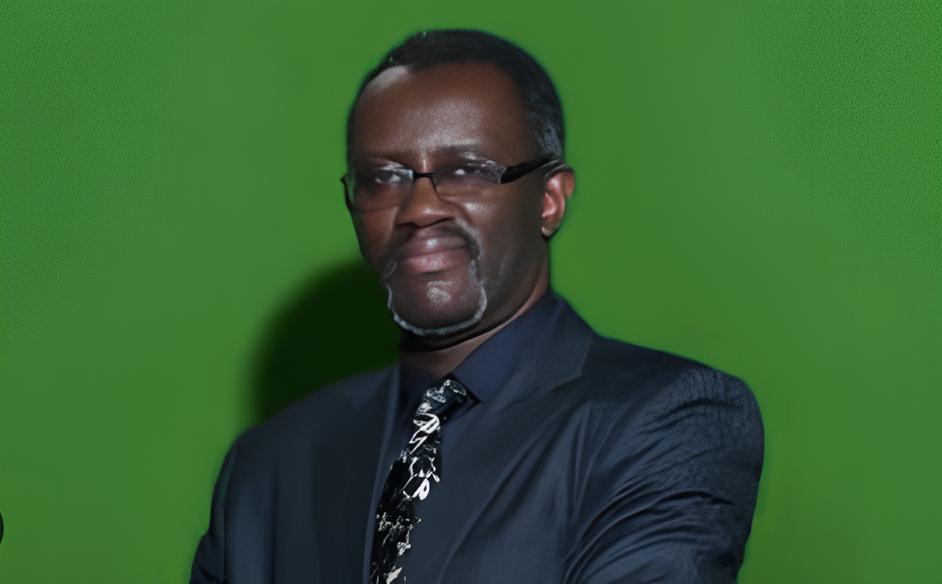
Paul Busharizi on Why Business Journalism Must Explain, Not Just Report
For more than three decades, Paul Busharizi has occupied a front-row seat in Uganda’s business journalism, not merely reporting on the economy, but interrogating it. In this conversation, he argues that beyond events and their causes, journalism is fundamentally about the why—why the economy falters or grows, why decisions are made, and what they mean for ordinary people.
He calls for the urgent need for business journalism to speak for the facts. He warns that when economic narratives are left solely in the hands of the political class, facts are often diluted or distorted leading to poor business decisions and long-term national costs. Business journalism, he argues, should serve as an independent interpreter of economic reality, grounded in evidence, numbers, and context, providing the public with clarity.
In his view, serious journalism should aspire to inform, explain, and drive a genuine desire for how the world works and to communicate that understanding to the public.
DK: You have covered business journalism since 1995. What has made you stay for all these years?
PB: This is best answered by how I got into journalism in the first place. I got into business journalism because of the state of the economy. When the economy is working, you don’t think much about it. It is only when it is broken that you pay attention. My family had moved to Kenya, and we lived there until I was 16. In Kenya, the Ugandan exiles who were already professionals could only find jobs as teachers. When we returned in 1988, the president used to talk a lot about the economy. I ended up taken up by it. I started as a freelance writer. But as they established the business desk at New Vision in December 1995, the editor invited me to join. At the time, William Pike was the head of New Vision, and he was an aggressive businessman who understood the importance of a business section. His leadership made me fall in love with my work.
Business journalism is not a job for me. It is a passion I carry for the economy. Journalism is the easiest way of following the economy without going to school. It is that interest that has driven me for all these years. The economy can never be fixed in one go. Journalism is the best way to keep up with the developments.
I have stayed because the alternative is corporate comms, which I find boring. I never found it attractive.
DK: In these 30 years, what are some of the significant shifts you have seen over the years in business journalism?
PB: Obviously, there are more business journalists than there were then. Business journalism is mostly associated with numbers, and journalists are not numbers people. They avoided it to begin with. But generally, there are more business journalists than there were back then.
When I became a business editor about 20 years ago, I thought that by now, we would have a standalone business publication like the Business Daily in Kenya. It has not happened because the managers of media houses are not interested in business journalism. We have not progressed in the sector as we should have.
The other thing is that we are using computers. And now AI, which should be making journalism more powerful because we have a lot of information at our fingertips.
DK: Has there been an appreciation or uptake of tech by journalists in the business desk?
PB: Some have. But we are not yet fully utilising technology. We are not maximising it yet, but I guess it will come with time. Back in the day, when computers had just come out, some people insisted on continuing with their typewriters until editors stopped taking their work.
DK: What are the current gaps in business journalism?
PB: The best journalists we have currently in the newsroom are sports journalists. This is because they start early; by the time they come to the newsroom, they already have a whole body of knowledge in the field they are covering.
Everyone thinks they can cover business. In the same way, everyone thinks they can start and run a business, but the statistics speak differently. The fear of numbers is a gap that needs to be addressed. And yet the numbers in business are quite simple. It is simple arithmetic.
The other gap is that there are too few women in business journalism. And those few women are too good. The challenge is that they are always quickly taken to do comms.
Also, universities do not teach business journalism. At the journalism schools, most of the lecturers do not come from a business background. It is usually academia and politics.
DK: Do we still have any opportunities left for business journalism?
PB: The whole sector is still underexploited. We’re at an interesting point in the economic history of Uganda. The economy is still growing, and if our business journalism is not up to it, we are going to make major business mistakes in our country. No one is speaking about the facts. When business decisions are left solely in the hands of the political class, the facts suffer, and so does the business.
DK: What would “speaking for the facts” look like?
PB: Look at the New Vision, for example, you have only one (business) page a day. Those are only two pages. The monitor has like three. You may argue that business journalists are not heard, but the truth is, they are not there. We are so few and so insignificant. But nothing is stopping us from creating our own online platforms and pushing them. And I think there is a good space for that. The challenge for us as Ugandans is that we are in such a hurry to see results. The idea is to start doing these things now.
DK: We have seen shrinking budgets in the newsroom. What does the future of media look like?
PB: The future is digital. And that future is already here. Traditional media is no longer a thing. We are living at a time when everyone has their own media platform. Companies like MTN have shifted their budgets because they have a stronger online presence than, say, a newspaper.
DK: Are journalists awake to this reality?
PB: Legacy media is still thinking the old way. They still think they have the monopoly, which has since gone. Legacy media has the biggest online platforms that they are not making full utilisation of. But to be able to tap into these opportunities, it requires the courage to jump into the new, which the managers might not be able to do. But the numbers will keep showing.
The public is no longer interested in knowing what has happened. The public is now interested in knowing why it has happened, what it means for me, and what this portends for the future. That is what the readers want to know. The days of breaking news are long overdue. Jeff Bezos acquired the Washington Post, and he has turned it around. Newsrooms could no longer afford them. He is rehiring them because they have the grand picture that the public wants and they are using more AI tools to get the readers’ interests into consideration.
The other thing with our legacy media is that we have too much baggage. We have things we don’t need. New Vision, for example, might consider renting out its space to make money from rent, but it is not looking in that direction.
DK: What would you recommend for young people still interested in joining journalism?
PB: Going by the current crop, they need to focus more on practical skills and pay more attention to new media rather than legacy media.
DK: Knowing what you know today, what could you have done differently?
PB: 15 years ago, I was an editor, and I could have fought to make the case for business journalism to have more pronounced to have more space. One time, the newspaper was due for a redesign, and I suggested having the business space come ahead, but it was not welcomed. I should have fought for such ideas. I thought things would be revealed with time. What I didn’t know was that times would change so fast.
DK: Your parting shot?
PB: We need more journalists who are interested in understanding how the world works in business, society, and politics. And then communicate that understanding to the public. I see a lot of mercenaries. It is in sports that I feel that journalists go over and above to give you an account that you may not have thought of.