Uganda Radio Network’s Business Editor, Nebert Rugadya, on Why Business Journalism Must Inform the Public
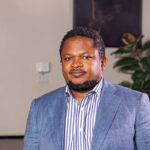
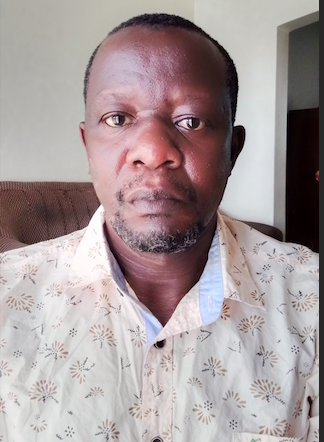
Nebert Rugadya is a seasoned business, finance, and economic reporter whose journey into journalism began quite by accident. Trained as an accountant, Nebert did not initially set out to work in the newsroom. However, a chance encounter with news while walking along Burton Street in Kampala—where a fire gutted transformers at the roundabout—changed the course of his career. He took photographs of the incident and shared them with the Daily Monitor, which published the story and paid him for his work. That single moment sparked a lasting interest in journalism.
Encouraged by the experience, Nebert began pursuing more stories as a freelance journalist. As the passion for reporting grew stronger, he decided to return to school to study journalism formally. More than 23 years later, he is an established journalist, currently working with the Uganda Radio Network (URN). In this conversation, Nebert reflects on his journey into the newsroom, sharing insights into his experiences, the gaps within media practice, and the opportunities that media houses can harness to strengthen their work.
DK: Who is Nerbert Rugadya?
NR: Nebert is a journalist. I have been a journalist for the last 23 years. I am a business reporter. But I say that in quotes because we tend to refer to anything where money is mentioned as business journalism. Whenever I am introducing myself, I emphasise that I am a business, finance and economics journalist. The three are different, though somehow related. Economics is far wider than business and finance. For example, when you talk about the budget, it is more about economics. While business is part of economics, not all economics is about business.
Before I joined journalsim, I was an accountant. I then studied journalism at the Uganda Management Institute. I joined Radio One as a freelance reporter. When they were setting up the business desk, I was asked to take it on. It was called the Business Report, a daily feature on Radio One. Because of my background in accounting, I was given the role. I saw an opportunity to get myself into real journalism.
As journalists, we have diversified from what we were meant to write about, that is, from the business environment, performance of companies, to financial markets, inflation, etc., to now things such as tech. At the time I was starting, tech was not there. Look at how telecom companies have evolved to become finance companies.
There is not much effort being put into the journalist’s profession to cope with what is happening. I have, for the last two years, been pressing my bosses to recruit and train tech journalists.
DK: What are some of the challenges facing media houses today?
NR: Our media houses are still struggling with specialisation, something the media owners are not willing to support fully. Talk about NMG and the New Vision, you would expect them to have all the resources to support their team, but they do not. For example, you find that Oil & Gas is expected to be a business item, yet it has a lot ot do with the environment.
DK: From where you sit, do you feel understood, given the nature of the work you do? You cover news from across the country with a lot of demands,
NR: If you want to serve radio stations, there are certain things you have to do. Sometimes we have to think critically about a story before we share it. Given our nature of work, we serve both online platforms and radios, so you have to create both text and audio news clips to serve the different audiences.
DK: Are there people who want to learn from you? Are younger journalists eager to learn from you?
NR: Yes, there are a number. Every media house has its own challenges. Training young people becomes hard because of the budgets given that our nature of work depends on financing, which is usually project-based. In the absence of financing, you lose out on the opportunity of training others.
DK: What are the prevailing challenges in the practice of journalism today?
NR: One of the major challenges is being trusted with information. Often, when you are looking for the key persons to give you a side of the story that you want, they are not forthcoming until they have something they want you to put out. Now, that becomes a marketing concern. We do business journalism, not marketing. It is something many people do not differentiate. There is an assumption that industry-related stories do not serve them, yet it is not true.
Secondly, most companies are always on the lookout for those who have published a negative story about them. Instead of coming to you for clarification, they immediately run to court. This is limiting. There are many stories we have abandoned because we could not get the company’s side of the story. Sometimes an article can get you into trouble. This affects the quality of journalism produced in the long run. Journalists need to know they have the protection of their bosses as they do their work.
DK: What would you do differently today to improve journalism practice in Uganda?
NR: First of all, the media and journalism are becoming harder by the day to distinguish. Everyone with a smartphone can wake up in the morning and call themselves a journalist. We have social media influencers who also identify themselves as journalists, but they are not accountable to anyone. That in itself is a danger. We need to be accountable in the way we do our work.
Secondly, for the journalism students, they need to be guided to the kind of journalism they want to do. I have seen it with doctors who always specialize at the end of their training. In journalism, we have a situation where people cover everything and anything. That lack of specialisation is dangerous. Bad reporting affects the industry.
DK: What recommendations do you have for retooling journalists?
NR: We have some workshops from entities with an interest in helping journalists grow. However, training should be a role of journalism bodies, not necessarily from corporate bodies. Thomson Reuters used to hold training at some point in Uganda, but they stopped.
DK: Let’s talk about the endless departures, in a fluid sector like this, what has made you stay?
NR: I was lucky to start with Radio One, a company that is known to be fairer in the industry. There were many opportunities. I got to work for the BBC while based at Radio One. I was doing two jobs at the same time. Even when that arrangement ended, I stayed as their stringer/ correspondent for some time.
Whenever I think of the opportunities that have come up for me to leave, I have not found them better. whereas they earn more, and that input is not as much as ours, I prefer to stay. I love writing. Whenever I get the offers, I always weigh the options, and often, I have not been moved to leave journalism.
DK: What are some of the things that have stood out to you during your years of practice?
NR: I have grown to love the Oil and Gas industry because of its diversity. I have been trained and become more informed about that space. I have come to understand the global perspective of the oil and gas industry more than I had thought of before.
On the other side, I have survived jail because of the stories that I have written. Thanks to the media owners who came through. Corporate stories can be a challenge at times. I have also done a lot of impact stories that I proudly look back on.
DK: What opportunities do you see in journalism today?
NR: There is more to learn outside than in the classroom. Technology has changed so much. How you play with your computer or mobile phone today matters a lot. You have to be ahead of the times. You have to think out of the box. There should be a wow factor in your stories. Multimedia journalism is here for us. We cannot run away from it. You have to be creative and digitally competent.
DK: Your parting shot.
NR: We did not foresee things as they are today. I never thought a mobile phone could be such a powerful tool at any point. We have to have an open mind, things are changing so fast. The time of fully relying on only your employer is quickly fading out. Sometimes you see a news item that your media house may not need, yet another one could need it.
I joined journalism when I took pictures of a fire that had gutted the transformers along Burton Street. I took them to the Monitor, and they published them a week later. I was paid UGX 35,000, and I was impressed.
There are enormous opportunities for journalists that they can make for themselves using their gadgets today. They do not have to sit back and wait.