
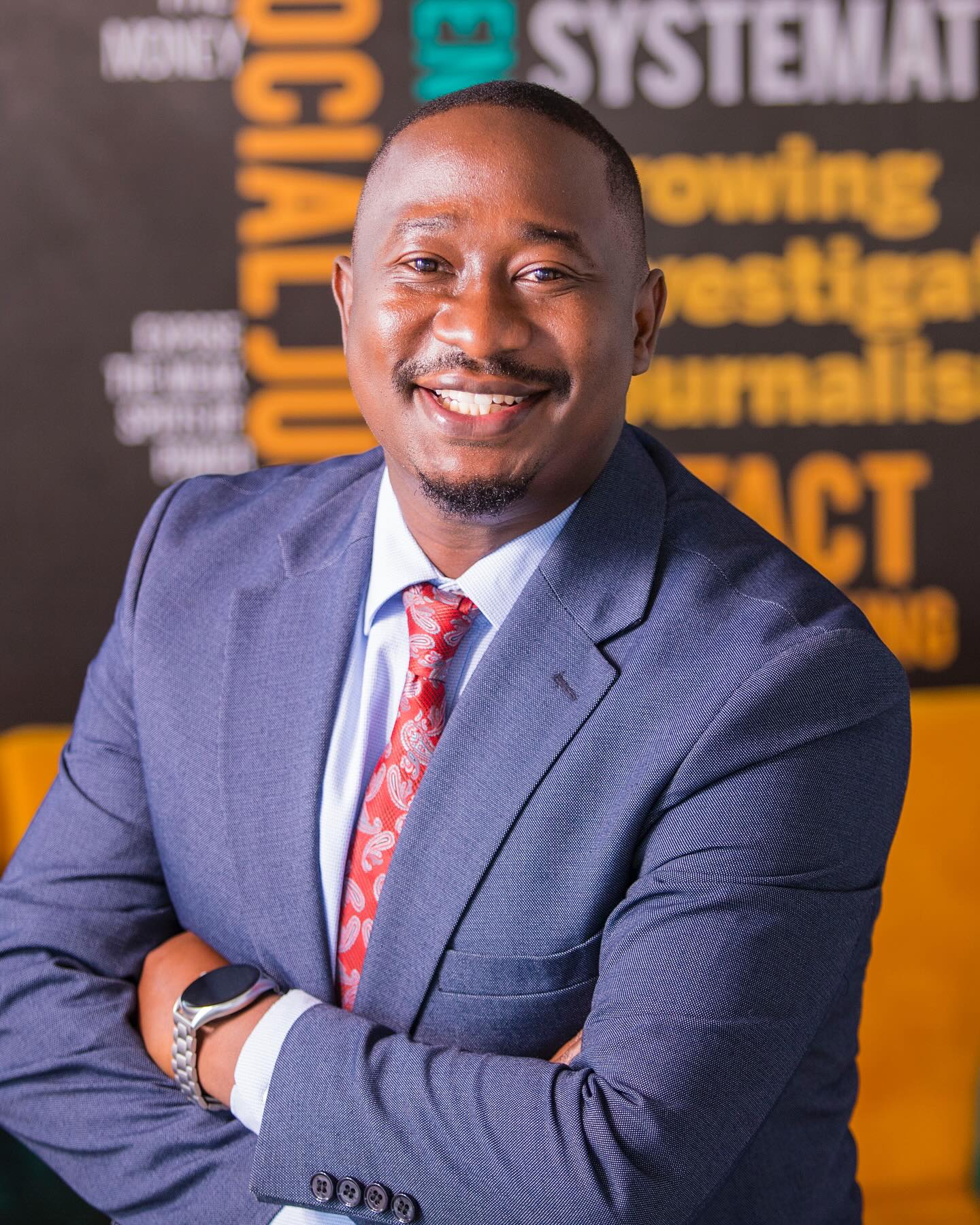
Solomon Sserwanjja on the Gaps and Opportunities in the News Business
Solomon Serwanjja is Uganda’s leading investigative journalist known for his bold reporting and commitment to public-interest storytelling. After years in the newsroom, he stepped out to establish the African Institute for Investigative Journalism (AIIJ), driven by the need to strengthen a craft he felt was losing support.
In this conversation, he speaks about his work, the gaps he witnessed in newsrooms, and the urgent reform he believes in: creating dedicated structures that give investigative journalists the time, resources, and protection needed to do meaningful, in-depth reporting. He also reflects on what journalists and media houses can do to uphold the integrity of the profession.
DK: As someone who has been in the thick of investigative journalism and also the traditional newsroom, what can you say about the news business?
SS: The news business has changed. Recently, Kin Kariis (the CEO of Next Media) said that print will not be here in the next five years. The media space has changed and we can no longer do business as usual. We need to look out for different models. The advertising models have shifted. For example, Airtel will give Solomon Sserwanjja money to host a Twitter space, which will be cut from a budget meant for a whole media house like a newspaper, because Sserwanjja has the numbers. More money will be spent on influencers and bloggers.
Media houses need to approach advertising differently. The biggest advertiser is the government. And we recently saw the government put its hand on the tap. The president stopped all advertising to media houses and channelled it all to UBC and the New Vision; it broke media houses and brought them to their knees. Whereas he reopened the taps, the question is how critical can the media now be when doing its watchdog role? The business models compromise editorial policy. So we have to find the balance between editorial policy and the business.
I have been in the newsroom long enough to know that some stories never make it to the news because you investigated a big advertiser. The clients who control the budgets. The media is supposed to be a mirror of what society is; it ends up representing a distorted image because that mirror has been broken. And this is because we have a business to protect. So we begin to look out for the existing models can the media houses can use to stay in the news but also to do critical journalism.
DK: What options do media houses have?
SS: First of all, we need to make the public appreciate the role of the media. People love good journalism, but they do not want to fund it. Investigative journalism is very expensive to run. Stealing from the Sick, one of the investigative stories I did, could not be run by my former employer because it was a newsroom budget for three months, money which could not be taken away. We had to source external partners who made it possible. If the public wants good journalism as it claims, it needs to start paying for it. They need to stop complaining about how the quality of journalism has gone down. They need to start paying for it. And this cuts across. The numbers are quite telling. Susan Nsibirwa, the head of NMG, recently put out a tweet calling on readers to subscribe. She was looking for 5000 subscribers to keep the business open. When you love something, you go out to pay for it.
Secondly, we need to have a big mindset shift in understanding the audience. The audience has shifted. Our biggest audience right now is young people. Big media houses out there have also diversified. You find a two-page story in the Financial Times summarised into a three-minute story on Instagram. Journalism has shifted to multimedia coverage. Think multimedia. Think about the different people in your audience: the visually driven, audio-driven and text-driven.
Thirdly, when you find out that someone is taking your audience, instead of fighting them, collaborate. For example, the Hard Questions Show is a product of AIIJ, and it has the numbers. Kin Kariisa reached out and offered an hour on NBS TV. I agreed on the terms that we would share the advertising revenue. When he goes to the market to negotiate with advertisers, he includes the Hard Questions as well. Instead of fighting amongst each other, creatively bring them in and find a middle ground.
DK: Unto whom is the burden of collaboration?
SS: At AIIJ, we use a non-profit model. When I am writing a grant proposal, I give the objective of the investigative story we are going to do. In there, I have to tell them my reach per episode, but I also include NBS, which means I share in their numbers. When you compound that, it means I have an average of about 300,000 people who watch each episode. Instead of the push and shove, we should find a meeting point.
DK: We still have gaps. How come people are missing out on the opportunity to collaborate?
SS: It’s because they are still lost in the fights. There are media houses in this town that do not allow their staff to take on any work from particular advertisers. They prefer the big advertisers to go to them as media houses. Media houses that refuse to adopt the cost-sharing model will struggle. There is a need to go for disruptive models. That is where the future is.
DK: In terms of product development, are we on the right path?
SS: It depends. Today, the way things are, you cannot be doing just one thing. For example, writing alone is not enough. At AIIJ, one of our products is the Grab a Coffee Podcast. We have X Spaces, we have the Explainer and Investigative Poetry coming up. Beyond the documentary work that we do, how do we put out new products to attract new audiences?
DK: Why is product development essential?
SS: As the media in Uganda, we need to think out of the box. MTN came into the market as a telecom; they had to do product development, starting with bundles, airtime sharing and later mobile money. Today, mobile money as a business is almost surpassing the telecom side. MOMO has grown beyond leaps and bounds. And they have not stopped. They are working overtime to make sure new products are added to the MOMO platform. The most important department in any company, including media houses, is business development. Someone has to wake up to developing a new product that will be put on the market.
DK: Let’s talk about talent. You are one of the journalists who left the newsroom. Why did you leave the newsroom?
SS: Daniel Kalinaki wrote an article titled, Will the last journalist out please switch off the newsroom lights? Because there was a big exodus of media talent from media houses, and that is simply because it does not pay well. I was one of the best-paid reporters, but I was putting in a shift of 15 hours per day. Media houses have a duty to make sure that the talent stays and to nurture new talent. When talent leaves, follow up with them. For example, when I left Next Media, I started AIIJ. Today, we have a partnership between AIIJ and Next Media. Media Houses need to seek out senior talent and start a mentorship program to nurture the young and emerging. Some talented people are currently underutilised, and we are missing out.
Secondly, media houses need to know that they are dealing with talent. You cannot confine a person like Sserwanjja into a newsroom. Loosen up on how you do the work. creatives are interesting people. Be flexible. We cannot be stuck in the business of clock-in, clock-out. We need to be results-driven.
DK: The young talent is disruptive in their approach to media practice. How do we deal with the friction of the fast-paced young people who have to be mentored by the laid-back old school approach?
SS: Integration is the way to go. The old school guys know the core of journalism practice. The need generation thinks you can bend these rules as long as you are telling a good story. We need to find that nexus. You need to fact-check a story. The new generation needs to humble itself to learn what the old guys are doing. There is a guy called the News Daddy, who was recently covering the G20 summit; he has numbers. But he still answers the 5Ws & H, but in his way. Innovation and captivating storytelling techniques are going to be very vital in news as a current trend.
DK: What future do you see? What keeps you on your toes to do the things you do, the way you do them?
SS: The genre of journalism that we push for is very dear to our hearts. It is not the usual. It is investigative journalism anchored in truth and facts. It is tough, difficult, and expensive. Many newsrooms have cut it out. What keeps me on my toes is finding ways of keeping investigative journalism alive by telling media houses to allocate budgets for investigative journalism stories, at least for one or two stories. You have to be deliberate about this. We are also looking at new creative ways of doing investigative journalism, not necessarily running pieces. Before, we used to make an investigative story that would air for 45 minutes; today, no one has that attention, so you have to reduce it to 5 minutes. We are doing a lot of training across Africa, and what existing opportunities exist and how many linkages we can make between the partners and journalists. We want to keep investigative journalism alive despite all the challenges that come with it. That’s what keeps me going. That’s what I want to be remembered for. I want to be remembered for having been at the centre of keeping investigative journalism in the newsroom.