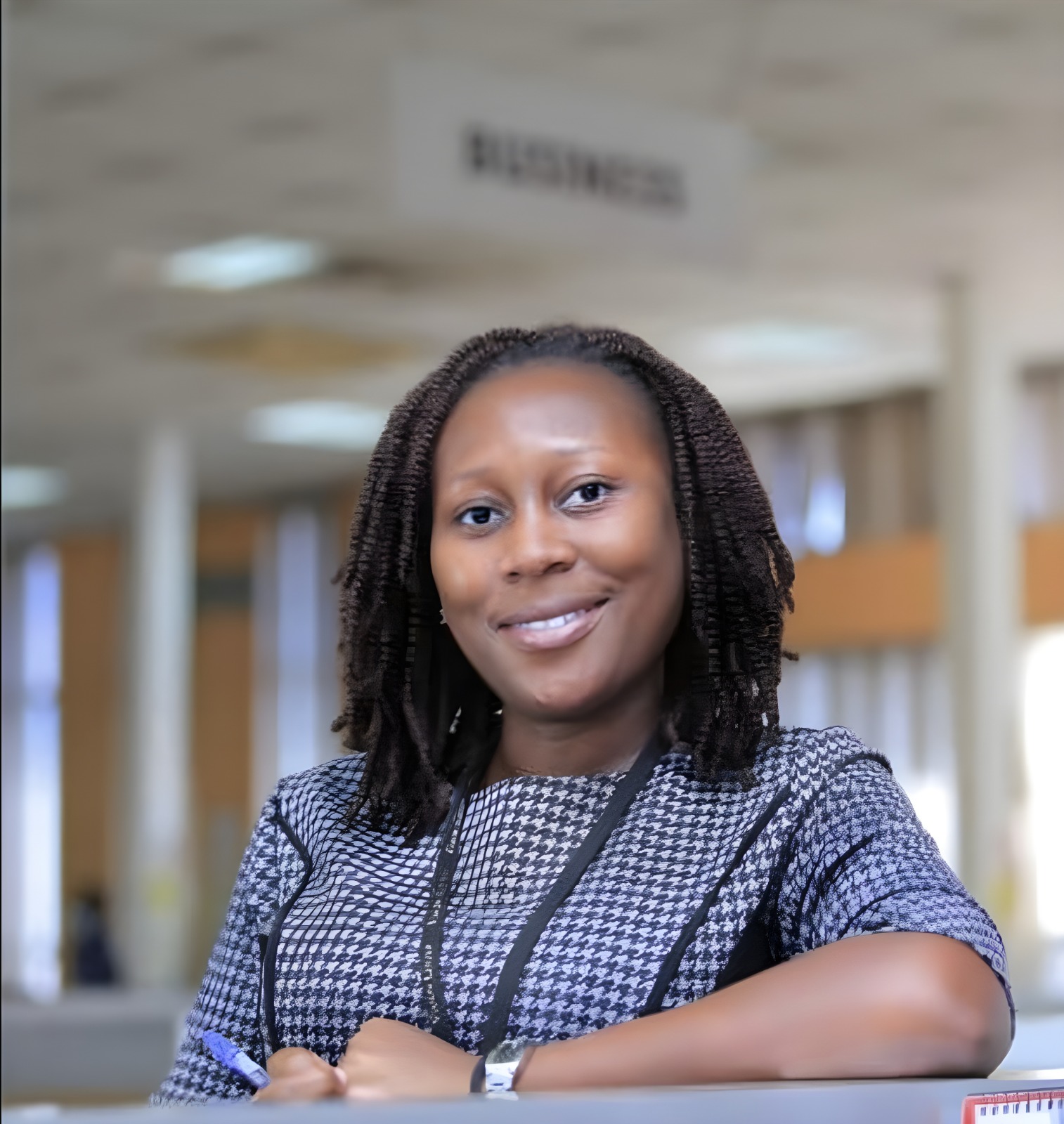
Vision Group’s Business Editor, Edna Mubiru on Depth, Disruption and the Digital Shift in the Newsroom
In a newsroom landscape transformed by digital disruption, shrinking print space, and an increasingly impatient generation of journalists, one principle remains central for Edna Mubiru: people above numbers.
For more than a decade on the business desk at New Vision, Edna has watched Uganda’s business journalism evolve, adapt, and in many ways struggle to find its footing in a fast-changing media environment. Yet through all these shifts, she insists that business reporting is not merely about profit margins, shareholder returns, or financial statements. It is about the lives behind the figures, the communities affected, and the people whose stories often hide beneath economic headlines.
DK: Where you sit on the business desk in the newsroom, what has changed over the years?
EM: What has changed is that I now see many young people come in, but they have little patience. Unlike before, where you joined the newsroom with plans to stay, it is different these days. Maybe the environment is different from what they expect. The other thing is that there are more people in the news chain, unlike previously when it would only be us. Today, we have influencers, too, in the space.
We also have a shrinking space; the newspapers are becoming smaller. We have to do a lot more on our digital platforms, and also work faster to provide depth that influencers who already have one angle to their story don’t have. That forces us to work differently. We have to add depth to every story we produce.
The other thing is that we have fewer journalists with agency to get more information from a given space. If you don’t make the effort, you end up not having any unique information. We encourage the teams to maximise the time they spend in the field covering events. Nurturing relationships with industry players is something we encourage all business journalists to do.
DK: Have you noticed any cultural changes in terms of business news coverage?
EM: From the time I joined the business news desk 13 years ago, I found that the business news fraternity is a really close-knit group. That was a very good thing because it created an environment where you can critique each other’s work constructively. Also, every time a new person came in, there was a willingness to help. Personally, I came in from the features desk, but I found a team willing to help me. Most business journalists covered particular bits (sectors), which made them the go-to persons on that subject. That in itself created a loophole in the long run, as such people could easily be poached. But what we have done now is to encourage the journalists to widen their scope of coverage. That way, they stand an opportunity to be more informed about different subjects instead of only one.
Back then, we had a lot of reliance on the editors, which has now relaxed. Today, work correspondence is through agencies. Agencies now talk directly with the reporters without the editors. The only risk there is that once the editor is not briefed, you may miss out on the opportunity of discussing other angles for the stories.
We also had a lot of training at the time I joined, especially from Thomson Reuters and Capital Markets Authority. Different institutions would come up with various trainings that would benefit the journalists. I benefited immensely from those trainings. Unfortunately, most of those doors have since closed. The bias is that business reporting is difficult, yet through such training, you make it easy for them. With more people leaving, you want to get more on board. Business reporting is associated with numbers, and that throws many people off. Yet, the gist of it is to show that whatever number it is, there are people behind it. make people understand why the numbers matter.
DK: Are there changes in the consumer trends that you’re aware of that have changed?
EM: Consumers are always looking for information about their particular subjects of interest. And many times, they do not respond until you get a detail wrong. Then, they let you know. That’s how you know they are following. What happens is that there are always discussions going on in different groups. We have not stopped reporting, but we listen to the different sentiments. Many times, you can do a story, and no one notices until it contributes to a bigger headline. For example, the mining sector has always been reported on negatively. We did a series titled “Golden Women” in March, which was a good feature about artisanal miners and how their livelihoods can be improved. Later, a conversation came out on how we can report positively about these reports, and this changed the appreciation of the stories.
DK: You have seen digital disruption unfold. Has business journalism been disrupted?
EM: We no longer have the privilege of breaking the news anymore. I believe we are at a point where every organisation can run its internal newsroom. The newsroom has been democratised. Comms departments are breaking internal news. We come in to do the analysis. We bring the different voices. The disruption is that we are no longer the only people with this information. We have to do a lot more to give value.
Secondly, the readers now come to us for the detailed side of the stories. Our role is to give more depth the other news partners are not sharing. But while doing that, we have to move faster. We need to phase out the way we do the news. We cannot sit back and be comfortable.
We now emphasise multimedia journalism, rather than just journalism. We expect every team member to file a story as soon as it runs. So we work hand in hand with the digital team, you serve the digital team, print and all the others. Tomorrow is too long a time to wait for the story to run. We have had to undertake a lot of training for our teams. We had to make our team know how powerful their phones are. We had to break the mould that we had of waiting to do everything when you are at the desk.
The other approach we have taken is to prepare for stories in advance, such that by the time the main stories are happening, we are only filling in the gaps. Take the example of NSSF announcements; they are annual. So you prepare beforehand and do the analysis. By the time the announcement comes out on livestream, we already have a different angle to the story.
DK: What are the opportunities in business journalism today?
EM: They are quite immense; there is not a particular subject that we have completely covered in detail. Take the example of the ATMS, all of which are business stories. There is something we have been trying to quantify in the creative economy. It is boundless. There is a business story in every news story. We can only dedicate more space to business journalism. Without space, the journalists have to find that space elsewhere.
DK: Are there gaps from coverage to editorial to management that need to be fixed?
EM: Yes, there are. First, there is a need to appreciate what business news is. We need to draw a line between what is an industry development story and what is public relations. Take the example of telecom: if MTN made a certain amount X in revenue, that’s a story for shareholders who are also your readers. That’s an industry development story; it is not about public relations per se. Business journalism is about making the case for such stories. A story on a new loan on the market may be seen as a public relations story, but on our side, it is a financial inclusion story.
We need to look at depth continuously. We need to find more people to train in business journalism, as many people do not stay. Also, the practitioners need to learn more soft skills like approaching people, protecting sources and showing up to take up roles.
DK: 13 years later, you have seen many people come and go, and yet you have stayed. Why?
EM: I have grown quite a bit from the time I joined to now. We have added several products to the market. I have been stretched far from where I started. My roles have grown from editorial to managing people and doing corporate governance roles. There has not been a moment I have felt bored while doing my work. Seeing the industry shift and being part of the solution, and even going back to school, have kept me moving. The industry has its challenges, but being part of the revenue generation of the group has pushed us. We now have to work as a revenue stream for the business hub.
DK: What would you tell people who want to join business journalism?
EM: Business journalism is a great area to learn from. There are many opportunities looking for you if you are willing to learn. Thomson Reuters, for the longest time, always came here looking for people to train. There are funding opportunities for stories. Such projects put you in particular networks. Business journalism has never been this relevant. ATMS, climate financing, and oil and gas are stories waiting to be told.
DK: Knowing what you know today, what would would have done differently from the time you joined business journalism?
EM: I should have spent more time in the field. I have done a lot of work at the desk. I would have done more work in the field. Most of the work requires your presence. I can imagine how much value it would have added to my editorial skillset.
DK: Parting shot?
EM: At the end of the day, every business story is about people, not numbers. All those numbers mean something for the people. People above numbers always.