
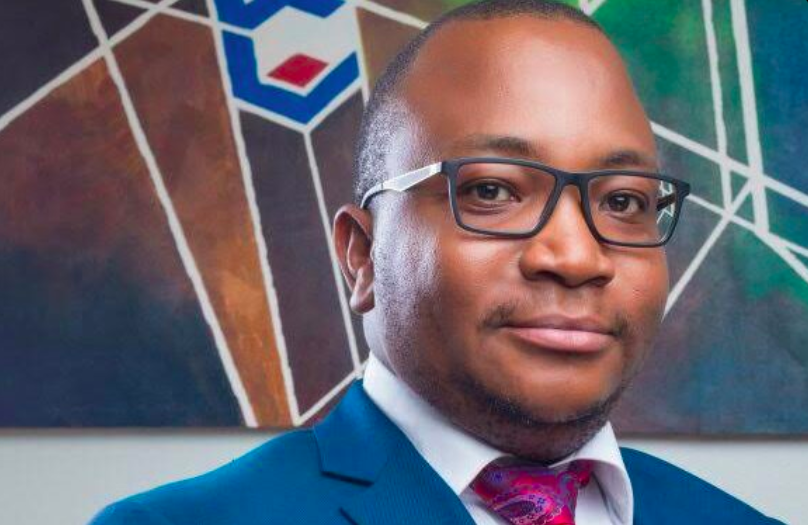
The Future of Media: Reinventing Legacy, Disciplining Digital, and Rebuilding Journalism That Bridges Both Worlds — Insights from NAB’s Dr Innocent Nahabwe.
Uganda’s media industry is standing at an uncomfortable crossroads. Advertising money has shifted from traditional newsrooms to influencers with smartphones; experiential activations have replaced 30-second TVCs; formerly dominant brands have gone silent; and media houses built on twentieth-century structures are struggling to survive in a radically different economy. Meanwhile, audiences have never consumed more content — but it is increasingly unstructured, unregulated, and often unverified.
Amid this turbulence, business journalism has suffered the most. Once a critical lens for understanding markets, corporate performance, economic policy, investment flows and national development, it has been squeezed by shrinking newsrooms, collapsing business desks, editorial disinterest, declining talent pipelines, and an explosion of superficial digital content. And yet — paradoxically — this is the moment when Uganda needs serious, rigorous business journalism more than ever. Treasury Bill bubbles, rising government debt, collapsing purchasing power, shifting global energy markets, the informality of the local economy, the rise of international investment platforms, and the entry and exit of multinational firms demand a new generation of journalists who can explain complexity, interpret numbers, follow money, and translate economic signals for the public.
Few people understand these contradictions with the clarity of Dr Innocent Nahabwe, broadcaster, businessman, and recently re-elected Chairman of the National Association of Broadcasters (NAB). In this wide-ranging conversation with Muhereza Kyamutetera and David Kangye, Dr Nahabwe unpacks the new economics of media, the collapse of old advertising models, the crisis in editorial talent, the dominance of influencers, and the structural gaps that have left business journalism on life support.
A candid, incisive, and urgent conversation for anyone who cares about the future of journalism, broadcasting, the changing economy, and the critical role of business journalism in helping Uganda navigate the next decade.
Muhereza Kyamutetera: So, Dr Nahabwe, looking at the media industry today — how would you describe its overall health? Particularly, the financial health? Where do we really stand?
There’s a clear change in how money is moving. The industry itself is undergoing a transition from its former state to its current one.
I remember around 2006 going to see Rita Okuthe, who was then the CMO at MTN. Their media mix was very straightforward: 10% newspapers, 50% radio, 25% TV, and the rest went to things like events, shows, magazines, conferences — what we used to call ‘other media.’ There was no social media to speak of.
Today, the landscape is completely different. Organisations like Coca-Cola are spending up to 85% of their budgets on digital. And this isn’t digital on our platforms — it’s Google ads, programmatic, influencers, storytelling and content. So the money that used to come to media houses is now going directly to individuals.
Take a recent Guinness ‘Game of the Day’ campaign. A lady was paid to create videos showing how a massive experiential truck was built. They fabricated a whole truck with screens that open up into seating, with a bar inside. She produced a 12–20 minute behind-the-scenes video. The spend on that experience alone was in the hundreds of millions. Meanwhile, a radio station might get five or six million shillings.
Why? Because digital is measurable. You can show views, insights, and reach — it’s easier for marketers to justify. Whether that’s the right target audience or not is another question, but that’s where the money is going.
So the issue isn’t that the money has reduced. The money is still there — it has simply been repurposed and redirected, largely toward individuals. Some influencers charge four million shillings for just one post. That’s the new reality we’re dealing with. So you’ll find someone charging four million shillings for a post, yet upcountry radio stations are charging one million shillings for an entire month of advertising. Meanwhile, this individual is simply moving around with a phone — with or without a microphone — and still getting that money.
That’s the transition we’re dealing with. And it forces us to ask: Where is the real influence? Who is actually delivering value for money? Often, brands use influencers they personally know, yet real influence usually comes from people within your circles. If I’m switching beer, it’s because of the people I hang around with — not a random good-looking guy on YouTube.
We’re also seeing a big shift toward short-form video — storytelling, vibes, sustainability themes, and community impact. Brands want that. So yes, advertising has moved; where it used to be and where it is now are completely different.
But we also can’t ignore the bigger economic picture. As a country, we haven’t had a single major company enter the market in the last 10 years. There was a time when telecoms were lining up — Vodafone, Warid, Smile, Africell. Now they’ve left, and no one is replacing them. Harris International once injected huge capital; now such expansions are quiet. Club Pilsener once dominated events; it has gone silent. Pepsi has shifted big investments to Kenya, squeezing its Uganda advertising budgets.
So the number of companies that would ordinarily spend is shrinking. The way they advertise has changed. That means everyone feels the pinch.
For us, the opportunity has been in innovation — particularly experiential. We’re now doing more hands-on brand engagements and interactive experiences, and that seems to be where the market is moving.
Muhereza Abel Kyamutetera: Businesses are evolving — some growing, some shrinking. How about media houses? How are they adapting? Are they evolving, shrinking, or closing out? Have you seen any closures in the industry in the recent past?
You see, once a radio or TV station is set up, the running costs can be managed. We’ve seen players who came in very energetic, started big, made noise — and now they’re simply struggling to stay afloat, or they’ve completely faded out. Stations like Delta TV, for example, or HTV from the pastors.
What’s happening now is that many pastors and religious organisations are taking over the space. You have Kingdom Media, Manifest Group, name it. Almost every big church now owns a TV or radio station. And that’s because they have a steady flow of income. Their believers are essentially the shareholders, continuously infusing capital even though they don’t hold actual shares. So those stations don’t rely heavily on commercial advertising; their model is sustained from within.
Then you have others like us (Galaxy FM), NRG, and a few more who are doing more than just selling advertising. We’ve moved into experiential. If it’s a beer brand, for instance, we take the campaign into the bars. We do activations, take photos, push content on social media — creating integrated campaigns that deliver the reach you used to get from traditional adverts, but with deeper interaction and real activities on the ground.
Muhereza Abel Kyamutetera: So these experiential activities — taking brands into bars, doing activations, creating content — are they actually driving conversion? Are you seeing real impact from that shift?
Essentially, yes — you’re selling beer on behalf of the brewer, or soda on behalf of the manufacturer. That’s the new positioning.
But you also still have some players who are stuck in the old model, waiting for adverts the way they used to come. They still have good rate cards, but those rate cards now operate in a low-cost reality. You’ll find a TV or radio station running with five people — and that’s it.
Ask yourself: for some of these stations, how many staff can you actually name? You realise the entire operation has shrunk because the old advertising-driven model can no longer sustain large teams. That’s where the industry is for many players.
Muhereza Abel Kyamutetera: But that traditional model — the stations waiting for adverts and relying on rate cards — it’s still there, right? Hasn’t it completely disappeared?
Yeah, that fixed-programming model is still there. It exists — but only to the extent that people can run it with the bare minimum resources they’re able to generate. Some players have simply chosen that path.
We’re seeing several stations going that direction: keep the structure, keep the routine, and just hope the future gets better. But honestly, I don’t see that happening. The economy is too tough for that kind of waiting.
So broadcasters have two choices now: either sit in survival mode and hope that ‘summer will come’ — that one good day the money will return — or reorganise themselves and start delivering the kinds of services the market actually needs today.
Muhereza Abel Kyamutetera: From what you’re hearing on the ground and the general vibe in the industry, have these elections brought any meaningful uplift? I remember looking at those old Ipsos numbers years back, and you’d always see spikes during election seasons, especially for print. Are we seeing any kind of useful spike this time around for the media industry?
We may call this an election season, but we all know what we have is far from ideal. Under normal circumstances, you’d expect the opposition to spend more on media, but it’s very risky to run their adverts. On paper, it looks fine, but once you air them, you may find yourself under extra scrutiny for things unrelated to the advert. Suddenly, you’re accused of not meeting minimum broadcasting standards, of over-moderating, or other technicalities.
So there’s essentially no money coming in from the opposition.
Previously, around this time, there would be significant money from international agencies — UNDP, DGF and others. But after the DGF issues, a directive came out barring foreign organisations from funding local election-related activities. Even this year, UNDP said they have funds, but only if the government gives written permission — which hasn’t happened. So that tap is completely closed.
That leaves the Electoral Commission and the government. But even from the government, the spending is very, very little. And frankly, they don’t feel they need to advertise. Many players are even offering them pro bono space — billboards, mentions, slots — simply to stay in good books.
People are bending over backwards because the market is tough, and survival increasingly depends on being seen to support the government. If you don’t, life can be made difficult in many indirect ways.
So is there new revenue? No. If anything, advertising has gone down. Some companies are afraid of the noise around elections. They hold back their marketing, pause initiatives, and take a wait-and-see approach. Foreign organisations in particular withdraw around this period. They don’t appreciate that Uganda is largely stable.
So we’re not seeing any revenue growth. In fact, the election season today means a decline.
David Kangye: I’d like to take you back to your earlier point on revenue from the big players. We have entities like MTN that are broadening their scope, and even several strong locally founded companies that seem to be doing well. Are they putting money into circulation? And if so, doesn’t that create a healthier environment for the industry?
No. You see, the key metrics companies use to determine advertising spend are based not only on their marketing goals, but also on protecting their position in the market.
Take soft drinks, for instance. The market for sweetened beverages is growing so fast that no company has excess stock. Whatever Pepsi produces is consumed immediately. They are limited not by demand, but by how much they can supply. So in such a scenario, why spend heavily on advertising when you already can’t meet the full market demand?
It’s the same with MTN and Airtel. Yes, MTN is broadening its scope, but they’re still operating within budgets they set five or six years ago. Competition has weakened. UTL is no longer a formidable competitor. And for most of this year, Airtel wasn’t advertising aggressively at all. So if you’re MTN and your share of voice is already at 90%, you ask yourself: Why spend more? You’re not under pressure to outspend anyone.
Airtel, after buying Warid, also rode on Warid’s perception of being ‘cheaper’ — even when the prices are actually the same. Psychologically, customers still feel Airtel is cheaper, and that’s helped them without needing extra marketing.
The same logic applies in the beer market. Ngule, for example, is one of the biggest beers in the country — roughly 29% market share — and it sits at a price point where people are trading up from local brews. It uses local raw materials, avoids import-related taxes, and fits a socio-economic reality. Demand is so high that they can’t even produce enough for the market. So if you can’t meet demand, why spend on advertising?
So yes, you may see big companies expanding their activities, but it doesn’t automatically translate into increased advertising spend. Many of them simply don’t need to push harder — the market conditions are already in their favour.
Muhereza Abel Kyamutetera: So they don’t want to stimulate demand, they can’t satisfy — which, in a way, is a good problem to have. But there’s also been a noticeable absence of some big players from the market. For example, Club Pilsner by Nile Breweries was once everywhere, in every activation and event. Now they’ve gone quiet. What’s happening there?
Basically, the entire marketing budget for the year was spent before the year even began, and there’s an ongoing audit into how that happened. So it’s not that they don’t want to be active — they simply don’t have the money to execute. The funds they would have used are tied up in that investigation, so everything has been slowed down. But from what I hear, they may open up again within the next year.
Muhereza Kyamutetera: But beyond the budget investigation, isn’t part of the silence because decision-making and budgets were centralised at AB InBev’s Africa headquarters in South Africa? With that shift, the local team seems much quieter than before… and slow to act.
Yes, because once you shift from a full-block operation to a setup where you’re basically a country office managed from elsewhere, the operations can’t remain the same. We’re almost running like a franchise now. The level of aggression we used to see — especially when competing with a big player like Diageo — naturally drops.
Club was the fighter brand: heavy on recruitment, big on universities, campus nights, sports, events, all those activations. That whole fighting spirit depended on strong, locally driven budgets. I don’t think that kind of investment is being made at the moment.
Muhereza Abel Kyamutetera: Let me shift to talent — particularly on the editorial side, which is what we’re most interested in. Historically, talent has always been a challenge across professional services, and the media industry is no exception. From your conversations with colleagues and your own experience, how would you describe the talent situation in editorial today? Do we have an oversupply, an undersupply, or is it a question of the quality and skills of the people running things?
It has become very difficult to retain top editorial talent because media houses simply don’t have the money to pay them. So the moment someone shows real promise, they get picked up by organisations that can pay better — PR firms, corporates, NGOs, agencies. Many of the top investigative journalists we once had, the people who were driving newsrooms and doing exceptional work, have all crossed over to PR, corporate communications or public affairs. What we’re left with, in many cases, are the people we can afford, not necessarily the best talent.
At the same time, the influence and importance of traditional media have reduced. In the past, if you held a press conference and got coverage in New Vision, Monitor, WBS and a few big stations, your story reached everyone. Today, a company can launch a product with just a few bloggers and influencers and build an entire campaign around that. Look at that new gin from Jinja, for example — all they did was release a limited edition, have Sheilah Gashumba do a stunt, get a policeman to ‘arrest’ her, and suddenly the product was everywhere. They even won several awards for that.
So when brands can achieve that kind of impact with a fraction of the budget — no 500 million shilling TVCs, no heavy media buys — you start to ask yourself: what kind of editorial talent do media houses need now to compete? And that’s the challenge. The economics have shifted, and talent has shifted with it.
David Kangye: So are you saying there’s been a shift in the kind of talent media houses are looking for? That instead of prioritising polished editorial professionals, organisations now prefer people who can bring in revenue — like strong marketers — or even entertainers and comedians who can keep audiences engaged on radio or TV?
Right now, everybody, our clients/advertisers are hiring content creators — the people who can come up with the smartest ideas and the stunts that move the market. If you can pull off a viral stunt, you’re likely to earn ten times more than the person with a Master’s degree who sits in the newsroom ensuring the copy is perfect. The creator delivers impact in minutes; the trained editor delivers a beautiful story that fewer and fewer people have the time or attention to read.
That’s the reality. With all the distractions around us, most people no longer sit down to read and deeply analyse a story. They skim. They look at the headline, the caption, maybe the first paragraph — and they believe they’ve understood everything. Nobody asks ‘So what?’ anymore. Nobody digs deeper.
So even if you produce high-quality journalism — the kind you’d find in The Observer or the CEO East Africa Magazine — only a small niche audience will engage with a 500-word or 1,000-word piece. The masses stop at the headline.
And because of that, the kind of talent media houses now need is the talent that can produce what the market actually consumes. The market itself is influencing the kind of content we create, and therefore the kind of people we hire.
Muhereza Kyamutetera: And when you look specifically at business journalism — where does it stand within this broader shift in editorial talent? Given the changing consumer habits, the rise of content creators, the shrinking newsroom budgets, and the declining appetite for long-form analysis, how is business reporting positioned today? Is it gaining relevance, losing ground, or simply struggling to find its place in the new media landscape?
Brands are like people — they have character and personality. But unlike real people, a brand doesn’t have a head or a face or a human voice, so its personality can only be expressed through stories. And that makes storytelling more important now than ever.
So business journalism, in my view, shouldn’t just be about reporting the Financial Times Stock Exchange (FTSE) index, stock movements, or company disclosures. In Uganda, that kind of reporting doesn’t have much impact. Our stock exchange is practically dormant — you can have an entire week with transactions worth only 300,000 shillings. The only real movements you see come from NSSF buying or selling shares. How many companies are even publicly traded? Very few.
It’s the same with forex. We know our currency doesn’t always respond logically to news. You can have terrible news, and the shilling still appreciates against the dollar. So the traditional ‘markets-moving-news’ type of business journalism doesn’t hold much water here.
Then you look at the broader economy — it’s heavily informal. Boutiques importing from China, traders moving goods in and out, farmers selling milk, small dealers everywhere. Many don’t even pay taxes. There is no structured system where a journalist can say, ‘Price X has changed, therefore this sector will shift.’ The linkages are weak. The noise in the news doesn’t fundamentally shift economic behaviour.
That’s why I think business journalism needs to evolve. It should focus on telling the stories of companies: helping brands define their identity, showing what makes them matter, and why people should care about them. Because people fall in love with brands the same way they fall in love with individuals — sometimes for reasons they can’t even explain. You walk into a shop and pick up a Nike cap, not because someone told you to, but because the brand carries a meaning you’ve absorbed over time.
So business journalism here should move in that direction — storytelling that builds understanding, affinity and love for the brands shaping our economy.
Look at what’s happening with leaders like Sylvia Mulinge. One of the reasons she became so influential — especially among women — is that she started sharing her gym routines on Instagram. That personal storytelling made her relatable.
And this ties into what we call the upper-echelon theory: a CEO’s personality, lifestyle, and interests shape the company’s priorities. When a leader values digital storytelling, the organisation prioritises digital. With Mulinge, digital became untouchable — even when other budgets were being cut. Wherever she goes, she moves with a content team. Even at the gym or in church, someone is capturing content.
That’s the world we’re living in: a young creator running around with a phone doing reels becomes more valuable than someone analysing bank performance. Because, honestly, whether a bank makes a profit or a loss today doesn’t change the interest rate they charge us tomorrow. It doesn’t change how they treat you if you default.
But a viral blogger, influencer, or creator can shake a whole institution with a single negative post. They can even trigger panic in a bank. So influence has shifted, and so has the value of talent.
David Kangye: From your position as a broadcaster, someone who traditionally carries the responsibility of informing the public, in this era where influencers shape perception, attention spans are shrinking, and audiences consume content superficially, do broadcasters still have an obligation to discharge the burden of information? In other words, does the duty to gather, verify, contextualise and responsibly disseminate news still matter — and how should broadcasters approach that responsibility today?
We all care — but we care differently. Everyone prioritises what affects their own survival. The influencer cares about influence: likes, shares, engagement. At that level, truth is often secondary. Whether the information is accurate or not may matter to them as long as it performs.
But for the person whose reputation or truth is being discussed, accuracy matters a great deal. So the ‘burden of information’ — the burden of proof — has now become something of a commodity. It’s no longer anchored in responsibility; it’s driven by incentives.
And this is happening in an era of deepfakes, fake news, and AI-generated content, where the fake can sometimes look more authentic than the original. How do you even know what is true?
That’s exactly why rigorous, credible media is still essential. When there is noise everywhere, and you’re unsure what to believe, you turn to legacy media — New Vision, NTV, Monitor — to confirm whether something actually happened. Because we are regulated. We operate under minimum broadcasting standards. We cannot just publish because we want to be fast. There is gatekeeping.
Yes, that means we are sometimes late, and the person who breaks the story first is often seen as the hero. That creates constant pressure for us. But the advantage is this: if you look at the biggest social media platforms, legacy media still controls the largest followings. A few individuals may have substantial reach, but the majority of high-impact audiences still belong to media houses.
That’s where our opportunity — and our responsibility — remains.
David Kangye: Recently, I spoke to Carol Beyanga. She told me about the period when she was Head of Digital at NMG, and they had to develop a digital policy for staff. They were facing a real crisis: journalists across the NMG platforms were breaking news on their personal accounts — news that later turned out to be fake. And this is where the whole idea of ‘the brand is the bond’ came in. You have your brand, and you have your sources. But when a staff member rushes to publish information from a source without verification, it creates a clash. It puts the credibility of the entire organisation at risk.
Eventually, NMG settled on a clear policy: staff can break the first alert as individuals and be responsible for it, but NMG as an institution will only publish once they have the full, verified story. The platform itself carries the detailed, accurate, fact-checked version. That’s how they managed the tension between speed and responsibility.
It’s a real conflict. Previously, the big clash in newsrooms was between advertising and editorial — the advertisers insisting, ‘protect my client,’ while the editors pushed to run the story regardless. Today, the new conflict is speed. Can the newsroom get the story out first, or will bloggers and influencers beat them to it?
Because while the story is breaking, a blogger is already there with nothing but a phone, going live instantly. Meanwhile, for us as broadcasters, we still have to mobilise: get the camera, get lighting, get a car, look for a driver, sign a voucher, and by the time all that happens, the story is already running online.
Let me give you a simple example. There was that truck stuck at Kyaliwajjala, near Kireka. Bloggers ran wild with rumours — that it was possessed, that it talked at night, but in reality, it just had flat tyres, and because it was huge, no one wanted to move it.
On the day they finally removed it, one guy simply stood there with his phone, went live on TikTok, and streamed the whole process. The picture quality was terrible, but he had about 35,000 people watching at one point — waiting, glued to the live feed. His likes and engagement skyrocketed.
That’s the competition we are dealing with now.
So you spend the whole day watching this guy with nothing but a phone pulling in tens of thousands of viewers, and it immediately exposes the conflicting demands we deal with as broadcasters. Do you prioritise getting it right or getting it fast? And that tension is now at the centre of everything.
I think the big players need to accept that they serve a different purpose. The expectations on us are higher — we are regulated, we have standards, and our work requires verification. We cannot win the speed battle. We simply can’t. Bloggers will always be faster.
So instead of trying to compete on breaking news, we must become the record of reference — the place people come to confirm what is true. Our value should be: ‘Yes, this was the news — but so what?’ We should go beyond the noise.
If someone is shot, for example, the boda boda guy going live won’t tell you who the victim was, whether she was a mother, how many others have been shot in similar incidents, what the statistics say, or what the implications are. His job is simply to show what’s happening. But it becomes our responsibility to dig deeper, to add context, to help the public understand what it means.
That’s the lane legacy media needs to own.
Muhereza Kyamutetera: Here’s something I keep asking myself: the media is one of the oldest industries we have, yet in Africa, it remains one of the poorest. Look at the numbers — Monitor’s turnover has hovered around UGX 20 billion for years, NTV around UGX 21 billion. For brands that shape national conversations and hold massive influence, those are tiny figures.
I think the problem is partly structural, particularly the mindset within editorial. For years, editorial teams have acted as if commercial realities don’t concern them. They’ve never wanted to understand the business model, never seen themselves as part of revenue generation, and often resisted anything that looked commercial. And this starts in journalism school, where students are not taught how media businesses actually make money.
Even in PR, you’d sit in meetings with executives whose companies contribute 5% of a media house’s revenue, and you could see the discomfort whenever business issues came up. Yet ironically, many of the people who have truly transformed Uganda’s media didn’t study journalism at all — they entered the industry with a completely different mindset.
So my question is: Is it time for journalism schools to overhaul their curriculum — to teach commercialisation, revenue models, and business thinking — and is it time for today’s journalists to rethink their mindset toward the business side of media?
What you’re describing isn’t unique to journalism. It cuts across almost all professions. The biggest challenge many professionals face is the inability to translate their technical skills into a sustainable business.
I come from the veterinary world. Most vets are brilliant at treating animals, but they can’t run clinics. They don’t care about marketing, customer experience, branding, or even basic presentation. A vet will show up in dirty boots, looking completely unprofessional, because training never taught them how to build or run a business. The same applies to doctors — many hospitals and clinics have collapsed not because the medicine was bad, but because the business was poorly run. You can list the big names that struggled or shut down; the common denominator was clinical excellence, but zero business management.
And it’s the same with journalism. Journalists were taught how to write stories, not how to run media enterprises. The assumption has always been that you go and do the technical work while ‘someone else’ handles the business. But in today’s world, that separation no longer works. Newsrooms and business teams cannot function independently; the two sides are deeply interdependent.
The best-performing media leaders understand this. Take Robert Kabushenga’s period at New Vision — that’s when the company saw some of its biggest growth. Why? Because he emphasised partnerships, community engagement, and value-creating initiatives like Pakasa and Top Farmer. These weren’t just content projects; they built relationships, strengthened brand affinity, empowered communities, and opened commercial doors. When a business leader receives a proposal from someone who has profiled their business, highlighted their impact, or engaged their audience meaningfully, the response is completely different. There’s trust, goodwill, and a positive vibe that traditional news alone can’t generate.
That’s why media leaders today need more than just a news orientation. They need additional skills — understanding partnerships, building relationships, creating value beyond headlines, and seeing how the story ultimately connects to sustainability. Because the truth is, readers will not fund the newsroom. Copy sales have dropped drastically. Advertising now runs as much on relationships as it does on audience numbers.
So, unless editors and media leaders embrace this broader understanding — beyond breaking news — it becomes very difficult to keep the industry alive. Journalism must remain rigorous, yes, but sustainability will come from partnerships, interactions, and the ability to.
Muhereza Kyamutetera: One of the reasons we wanted this conversation is because we’re doing a kind of gap analysis — a needs assessment — to understand whether there is real demand for business reporting as a skill and whether there is a genuine talent gap in the market. You’ve partly touched on this from your experience, but as we begin to make the case for partnerships, we need solid evidence from industry stakeholders like you.
So, from your vantage point — both as an individual in the industry and as someone who engages widely with colleagues — what gaps do you see in business journalism today? And where are the real opportunities?
Because our thinking is that to truly change the game, you can’t just focus on people already in the field; many of them are already conditioned to a certain way of working. It’s like giving a management course to a doctor who has practised for 10 years — you’re trying to unteach too much. Maybe business journalism, like studying in China, needs a ‘first year of Chinese’ — foundational exposure before the real training.
That’s why we want to work with universities, bring in students even from non-journalism courses, and give them fellowships, practical exposure, and newsroom experience. A student who has spent even three months in a bank’s communications department will likely become a far better financial reporter than one who has only studied theory.
Today’s journalist needs more than classroom knowledge — they need skills, equipment, and versatility. One laptop, one phone, and they should be able to file a complete story 15 minutes after a press conference without returning to the newsroom. That reduces reliance on editors we can’t afford and eliminates delays in the production chain.
So, wearing your hat as a media owner, a practitioner, and as NAB Chair — where do you see the biggest gaps, and what opportunities exist to strengthen business journalism in Uganda?
There is a huge gap. And it starts with the fact that our economy no longer operates purely on local dynamics. Our stock exchange is inactive, our markets don’t shift because of daily business stories, and the average investor is not reading the business pages of the newspaper to decide where to put their money. Most investors here are influenced by politics, policy, and global trends — not by local business journalism.
Yet at the same time, we are increasingly part of a global economic ecosystem. International companies operating here are influenced by reporting done in London, Johannesburg, New York, not just Kampala. When decisions like Standard Chartered’s selling of its African operations are made, they are informed by global reporting and global investor sentiment.
That’s why the real gap in business journalism today may not be in newsrooms, but in business communication. Companies need people who can translate complex financial information into simple language for investors, boards, and the public. Accountants can compute the figures, but many cannot explain them. CEOs are often charismatic and good communicators, but many cannot interpret financial documents deeply. So there is a clear need for people who can convert numbers into narrative — for prospectuses, annual reports, speeches, corporate websites, and investor briefs.
As more Ugandan companies grow, they will reach a point where operating informally — with everything ‘in the head’ of one founder — becomes impossible. They will need CMOs, CFOs, governance structures, and people who can interpret financial health beyond just the balance in the bank account. That requires a different kind of business communicator.
So yes, the gap exists — but not necessarily for newsroom jobs. Newsrooms today may prefer comedians, influencers, and content creators because that’s where the numbers and revenue come from. But businesses — serious businesses — need something different. They need people who can translate complicated business information into accessible insights:
‘MTN is healthy. They have paid dividends consistently. This is a good investment.’
Investors today are not just looking at local opportunities. Because of digital trading, Ugandans are investing in Google, Meta, Nairobi, Johannesburg — even Rwanda. Those people need accurate, clear business information, even if they consume it through unconventional platforms. Some people are learning business from TikTok. The platform may be funny, but the information is serious.
And the truth is, not all of us will be comedians chasing likes. There will always be space for serious business reporting and serious business communication. The challenge — and opportunity — is to deliberately create that space.
David Kangye: You work with a large network of broadcasters across the country. What opportunities exist for media houses, especially those operating far from urban centres? Many NAB members include stations run by religious organisations, others owned by politicians — but at the end of the day, they all face the same commercial pressures and must operate as real businesses, not extensions of their founders.
Given the diversity of ownership models and the economic realities outside Kampala, what practical opportunities do you see for these broadcasters to grow and remain sustainable?
For many of those broadcasters, especially upcountry, growth is not even a priority. A lot of them make no effort at all. Some don’t have marketing departments, they don’t invest in talent, and they don’t think about the commercial side of the business. Their model is simply to keep the lights on and deliver a message of hope — ‘God will help you, things will be better.’ And because their audiences believe that everything they have achieved comes from someone they must give back to, money comes in through offerings at lunchtime, fellowships, evening services, and Sunday gatherings. In that setup, skills and staff quality don’t matter much.
But as countries become wealthier, they also tend to become less religious. Over time, there will be competition for the few people who are still available to watch or listen during the day. If you look closely at many of these fellowship crowds, the people seated on stools in the mud, praising during lunchtime services, are not the ones earning a million shillings a month. Those with real jobs are working in the afternoon.
So when we think about training or preparing the next generation of broadcasters, we cannot base our decisions on what the industry looks like today. We must think about where the country will be 10 years from now. MTN and Airtel have listed 20% of their shares — how many Ugandans will have bought into those stocks a decade from now? Even Qcil’s share price, after a poor post-IPO run, has started improving.
If companies get strong leadership and begin to grow, Ugandans may diversify. Maybe we will not all keep investing in apartments; maybe we will shift into equities. Unit trusts are already the biggest store of value in this country, and that money eventually has to go somewhere.
So the future opportunities for broadcasters lie in anticipating that shift — preparing content, skills, and business models for a more informed, more prosperous, less religious, and more investment-driven population.
And that’s exactly why we need stronger business journalism. Right now, everyone is running to Treasury Bills because the returns look attractive. But that’s a short-term boom. At some point, it will peak and then decline. People think lending to the government is a guaranteed deal — until you remember what happened in Greece and Ghana. Ghana was one of Africa’s best-run economies, and even it went bust.
Unit trusts already hold huge amounts of money in this market. That money can run us for years — but it eventually has to go somewhere else. And when Treasury Bills stop being the haven, people will need guidance on where to invest next. That’s where business journalism becomes essential: helping ordinary investors understand risk, opportunity, and long-term value.
If the government keeps borrowing at this pace, it may eventually have to print money. When that happens, inflation rises, and your 20% return becomes meaningless because your shilling buys almost nothing. You’ll have 10 million shillings, which buys you a loaf of bread. People need to understand these dynamics before they invest — and only serious business reporting can provide that clarity.
Then look at oil. We keep saying oil will save us, but even Saudi Arabia and the Gulf are aggressively diversifying into tourism, sports, and renewable energy. They know the global shift away from fossil fuels is real. Uganda can’t afford to wait for oil money that may be irrelevant by the time it arrives. Again, that requires journalists who can explain global trends, energy transitions, and long-term economic implications.
And the truth is, Uganda’s economy is now globally exposed. Investment decisions here are influenced by reporting done in Johannesburg, London, and New York. When a multinational decides to buy or exit, it’s because of global reporting and global sentiment. So our journalists must be able to interpret those forces and explain what they mean for Uganda.
More importantly, the biggest growth in this country has come from companies that managed to attract foreign investment — SafeBoda, Rocket Health, Guardian Health, and others. To attract that kind of investment, you must tell your story well. You need people who can translate financial data into a compelling narrative investors can understand and trust.
Most accountants can compute figures but cannot explain them. Many CEOs are charismatic, but they can’t interpret financial statements deeply. Yet investors need someone who can translate complicated business information into simple, actionable insights. That’s business journalism.
So yes — there is a very real and urgent gap. And the opportunity is massive. Uganda needs people who can go beyond headlines, report on serious issues, analyse global shifts, advise the public, and help businesses tell their stories in a way that attracts capital. Not all of us can be comedians or influencers. Some of us must do the serious work.
Because as the economy evolves, the need for credible, well-informed business journalism will only grow.
Muhereza Abel Kyamutetera: And even more importantly, now that more and more people are relying on unstructured, unregulated media — and consuming far more of it than traditional platforms — isn’t there an even greater need to ensure that the people operating in that unstructured space are properly skilled and informed?
Exactly. Even within that unstructured space, there must be people who deliver quality content. Not everyone can be shouting into the void. Look at X, for example — most people go there to make noise, but someone like Alex Kakande has managed to stand out by doing serious, thoughtful work. He has built credibility because he consistently produces substance, and he stands for something.
So even in unregulated media, there is room — and a real need — for individuals who bring rigour, insight, and quality to the conversation.
Like we’ve said, many people in the unstructured space focus on noise. Noise is the first level of marketing, yes, but the real ROI is in conversion. Most creators obsess over likes and impressions, but never ask, How do I follow through? How does this actually change behaviour?
This is where media houses must rethink their value. You can’t just shout; you must offer an end-to-end solution. If a client says, ‘People are no longer drinking our beer,’ you don’t just run adverts. You design a full pipeline: awareness, activation, engagement, and conversion — and actually show the results.
Ultimately, whatever you do must make sense. Noise can get someone to try a product once, but only true value — the arithmetic — keeps them coming back. Does the product solve my problem? Does it deliver consistently? Not just this week, but next week as well?
That depth of understanding, that ability to connect noise to value and value to behaviour, is exactly what’s missing — and exactly why we need more serious, informed business communication and journalism in this ecosystem.
David Kangye: My last question to you — wearing your NAB hat — concerns the future of media houses whose traditional models are no longer sustainable. We’ve already seen brands like The Observer come close to shutting down because the structures they started with can’t survive in today’s environment. For media houses built on old models that are collapsing, what realistically comes next for them?
One of the biggest challenges we have in this industry is what I call the dead horse problem. You have a horse you’ve treasured for years — strong, reliable, a champion. Then one day it falls sick. The vet tells you bluntly, ‘This horse is going to die.’ But instead of accepting it, you start thinking, maybe it just needs a better vet, or better food, or stronger medicine. Yet the truth is: the horse is dead. There’s nothing more you can do.
That’s where many media houses are today. They don’t want to change direction. They want to hold onto the old model, even when the business has completely changed. Yesterday’s problems are not today’s problems — and you cannot solve today’s problems with yesterday’s methods.
Take The Observer, for example. If you’re printing 10,000 copies of a weekly 36-page paper, you cannot run it with a traditional structure of bureau chiefs, full newsrooms, and a big team. That model simply cannot work today. It’s financially impossible.
So the first step is accepting the new reality and rethinking your model around it. You must ask:
What are we? What value do we deliver? Who exactly are we serving?
Legacy brands have a huge advantage — credibility, investigative depth, and recognition. But instead of trying to serve everyone, they need to narrow their target and build content that people are willing to pay for. You don’t need a million readers. You need the right readers — people with the ability and willingness to pay for premium, relevant content.
We have enough pensioners, retirees, senior professionals, and CEOs in this town who still care deeply about good journalism. They have time. They have an interest. They value depth and ritual. But they are not looking for celebrity gossip and scattered sports updates. They want thoughtful profiles, policy analysis, history, leadership, governance, things that speak to where they are in life.
This is where many media houses make the mistake — chasing big numbers instead of the right numbers. Trying to appeal to everyone dilutes your brand and makes your model unsustainable.
Look at Radio One. They have embraced nostalgia — the music of 20 years ago that means something personal to people above 45. Those songs carry memories of first love, first job, first child. The audience doesn’t care about today’s club bangers. They want what speaks to them. That’s why Radio One is finding its lane.
So media houses must do the same:
- Rethink their audience.
- Realign their costs.
- Focus on value over volume.
- Embrace a narrower, deeper market.
If you know who you’re talking to and deliver consistently for them, you will survive. There is space for every model — including specialised publications like CEO East Africa Magazine. The future belongs to those who understand their market, speak directly to it, and stop trying to be everything to everyone.