James Onen on the Future of Radio: Audience Change, Reinvention, and Missed Digital Moments
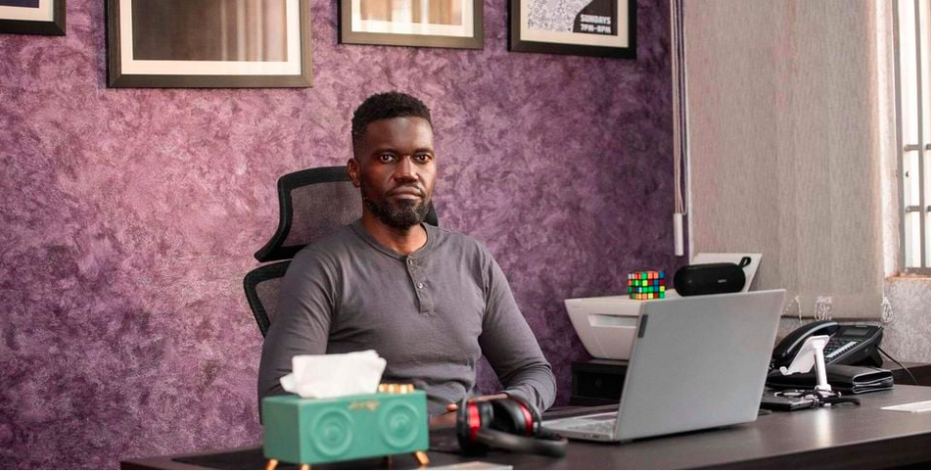
In this conversation, David Kangye sits down with veteran radio presenter James Onen, popularly known as Fatboy, whose unmistakable voice and provocative style have shaped Uganda’s radio scene since 1999. He recounts his time at Monitor FM, Sanyu Radio and now at RX Radio, his own.
Fatboy built a distinguished brand that defined morning radio for two decades. His journey offers a closer look into the evolution of radio programming, audience behaviour, advertising shifts, and the broader transformation of legacy media.
He looks back to the days when radio presenters commanded cultural conversations from the studio, and today, when online personalities are in charge.
DK: You’ve been on the radio for a long time. How long has that been?
JO: Since 1999. I worked with Sanyu FM from 1999 to 2001, and then I got an opportunity to work with an advertising agency called VR Promotions. But the work was too hectic for me. I left at the end of 2003. I then joined Monitor FM at the start of 2004.
I joined as the programming manager for about two years. But the company was not happy with the direction the radio was taking, and they decided to reboot the station. The radio station had been established as an extension of the newspaper, a concept which was hard to push. I left when they were rebranding to K-FM.
Sanyu called me back and offered me the programme director role in 2008, when I let go of it in 2010. I preferred being a radio presenter to being a manager. I remained a radio presenter till 2020.
DK: What made you show up on the radio every other day for all those years?
JO: Working on radio was never my dream job. I entered radio by accident. I was unemployed after graduating with a bachelor’s degree in commerce. I was listening to the radio one night and the presenter sounded so horrible. I thought if he could get a job, I too could. I went and did a voice test at Sanyu and got it.
DK: Have you ever practised as an accountant?
JO: No. I started finding fulfilment in radio. I ended up doing quite well. I brought something different to the radio. A unique personality of sorts. I built a brand and a fanbase, and the money followed. I was paid more than many of my colleagues in the industry. I guess I became so comfortable.
DK: Did you get any offers from other stations at the peak of your career?
JO: I did –several of them. For example, KFM called me back. They were struggling with their morning show. They had big names that were not suitable for each other. They needed a shakeup. At the time, I had one of the biggest breakfast shows in town. I used the opportunity to negotiate for a pay rise at Sanyu.
DK: As a breakfast show host for a long time, what made breakfast shows stand out?
JO: In most broadcast media, the airtime is divided into different sections. One of them is the primetime section. For radio, that is mainly during the morning and evening when people are actively listening. Most people listen to the radio while commuting to work or on their way home. 7 am to 9 am are the peak hours for morning shows.
DK: Did you do any other show other than the breakfast show?
JO: I started with The Drive Show before the breakfast show. I also had the Alive and Kicking on Saturday morning from 6 am to 10 am.
DK: What made you stay at Sanyu when you had a lot of invitations to leave?
JO: I loved the fact that the radio station let me do what I wanted to do. I had leeway on what I could talk about. The station did not have too much bureaucracy. I would do my show and leave. The environment was conducive for me. By 11 am, I would be done. And by midday, I would be home.
DK: What was your highlight moment at Sanyu?
JO: Quite a number. My character evolved. The Fat Boy character, for example, was born around 2004. I took a comedic turn in my personality. I would create pre-planned scripts and storylines for the show. There is a time I interviewed with Jack Bauer. I used to record silly little dramas which no one else was doing. There was also a time we did the April Fools’ Day prank. We went to CBS FM, and the CMS crew hosted on our side. That was something.
DK: How many co-presenters did you work with during your time?
JO: I had Alan Kasujja, Melanie Kaita, Seanice Kacungira, Emma Kironde, also known as Nina, and Josephine Katabarwa.
DK: Which are some of the audience patterns that you noticed shifting that forced you to tweak your approach as a presenter?
JO: Gradually, social media was growing in prominence. I was an early adopter. I had a lot of traction on Facebook, where I caused a lot of trouble. There were many times Facebook deleted my account, and I had to start all over again. I ultimately failed to build a massive following. I ignored Twitter, much as I had had an account since 2011. Today, Twitter giants dominate conversations. Had I started that early, I would have been far by now.
At the time, radio personalities still held cultural influence. Not as much now.
DK: In terms of programming, did you ever find yourself yielding to social media pressure in terms of content structure?
JO: Until I left Sanyu, there was still some power and sway in discourse. It was not uncommon to see people discussing the content of the radio on social media. Today, the situation is opposite; the radio presenters are always talking about what is happening on social media. We used to set the trend. Now, it is the reverse.
DK: Why do you think it is like that?
JO: Essentially, media and commentary became democratised. Everyone with a phone is a publisher. Initially, we were the main voices. The media outlets and their personalities were the ones on social media dictating what people were saying. As more people got on social media and built their own voice, and without the same constraints as us in the traditional media, people were more able to ascend to prominence than we were. We were playing by the old rules. There are conversations we could not take part in.
DK: Did you ever find yourself in a position where you had to defend your word or what you said?
JO: I tried to be more careful with what I said. Save for one time, together with my co-host Alan Kasujja, in a special segment called ‘Special People’, where we picked up on one particular group and celebrated them. That particular day, we celebrated the homosexuals in 2008, when it first came out. We were called to the managing director’s office, where we were told to write apologies.
DK: Radio presenters were trendsetters. Did you ever feel the weight of your words, knowing that your audience took you by your word?
JO: Not really. I never thought too seriously about my role in society. I was all about trying to be interesting. But I never thought of it as my obligation to serve the audience in that regard.
DK: One day, your time at Sanyu came to an end abruptly. Did you see that coming?
JO: It was a strike. A staff strike that I was a part of, but not the leader. When salary cuts were initiated during the lockdown, I too was concerned, but it was not such a big deal. I could still afford my life. But some of the members were not happy at all. I participated in solidarity with other colleagues. On the second day of the strike, I received an email saying my contract had been terminated.
DK: You seemed like you already had a backup plan. It took you a very short time to announce the birth of your own online radio, RX Radio. Did you have this plan already?
JO: Let me put it like this. As I mentioned earlier, I had time and money on my hands. In my spare time, I was doing a lot of learning about radio. I was deeply into radio. I also had a home studio, which I would use to produce my own projects. I had all the tools of a radio station in that studio. I never had the plans to leave radio and do this. However, should it happen, as it did, I would take it up as something to do.
Like anyone in any business, I looked at what I had to determine my next move. I was approached by a radio station to join them. But after 20 years in, I thought I could as well do my own thing. It was a smooth transition, I should say.
DK: For the last five years, you have been building RX, an online radio. What are the major differences between traditional and online radio?
JO: With online radio, the medium of broadcast is different. I broadcast through a stream, which means my audience is global. However, even the other radios are now streaming.
DK: How is the business of online radio doing?
JO: Self-employment is strictly challenging. The struggles are from another world. Going from only caring for yourself and not caring where the money comes from to now being responsible for yourself and other people. I did not have investors. I only had my personal savings and help from family. Handling the business side of things was challenging. I could do the creative side easily, but the business one, not really.
The sales teams were not delivering on their promises. I had to jump in. It dawned on me that the radio was an extension of me. I was getting business because it was me.
DK: Does it make business sense now?
JO: Now it does. I have changed the way I do business. I stripped everything down to essentials. When you look at how people consume media, it does not make sense to have a big operation. In my case, I was the big talent of the station. I thought I would hire as many people as possible and create a product that would be of interest to the listeners. I would then convert the audience into sales. I was not experienced with the business conversion.
This is also when social media celebrities were taking over. And yet most of my team members were from the old school. People who are a bit restricted in getting themselves out there. Obviously, you cannot just throw people into a space they do not want to be in. I was not getting the traction. The environment has changed. I restructured to more moderate talents to adjust my budgets. I have also automated most of the processes to take on the responsibility of like five people I was paying.
The radio is more of an extension of me as opposed to me being the extension of the radio. People do not follow brands anymore. Brands are the personalities. We used to have this debate of personality versus stationarity, which markets the most: the presenter or the station? Stations prefer to promote themselves. Today, the personalities are bigger than the stations. You have to do the math and see what works.
Radio dominance has shifted to social media. Many of these social media personalities are bigger than us. That is a fact. An influencer with 10 million engagements across the platforms will get more traffic than what radio can offer.
DK: Attention has shifted. How are you staying afloat, and how are you attracting business?
JO: I am the magnet. By continuing to immerse myself in the cultural conversations, I can project my relevance and the force of my personality, and I can use that to follow opportunities on the radio. I end up selling the full brand. I lead with me; afterwards, you get the radio.
Budgets are shifting. Advertisers are spending more on personalists. You have to front the personalities.
DK: What is your sustainability plan for the radio station without you?
JO: I honestly do not think there is one without me. One day, when I wake up and I am tired of it, I will just sell it off. Most of the radio stations are not sustained from internal revenues. Their owners can draw from other sister companies to run the radios. Most radios are owned by politicians and religious leaders which makes them extensions of their other services.
DK: Standing where you are, what would you have done differently 10 years ago?
JO: I would have been more strategic with my social media. I do make use of the footprint I have now. But if I wish I had been more intentional about it.
DK: What one thing would you like to leave us with?
JO: Legacy media is dying. Newsrooms are shrinking. I outsource my news now. It is cheaper. Before, I had three news anchors. Podcasters are the future. Today, you have YouTube channels with more viewers than TVs. Streamers are taking up spaces, yet their costs are significantly lower. The Uganda Communications Commission is still slow in adapting.
Photo by Walter Kahuma|NMG