
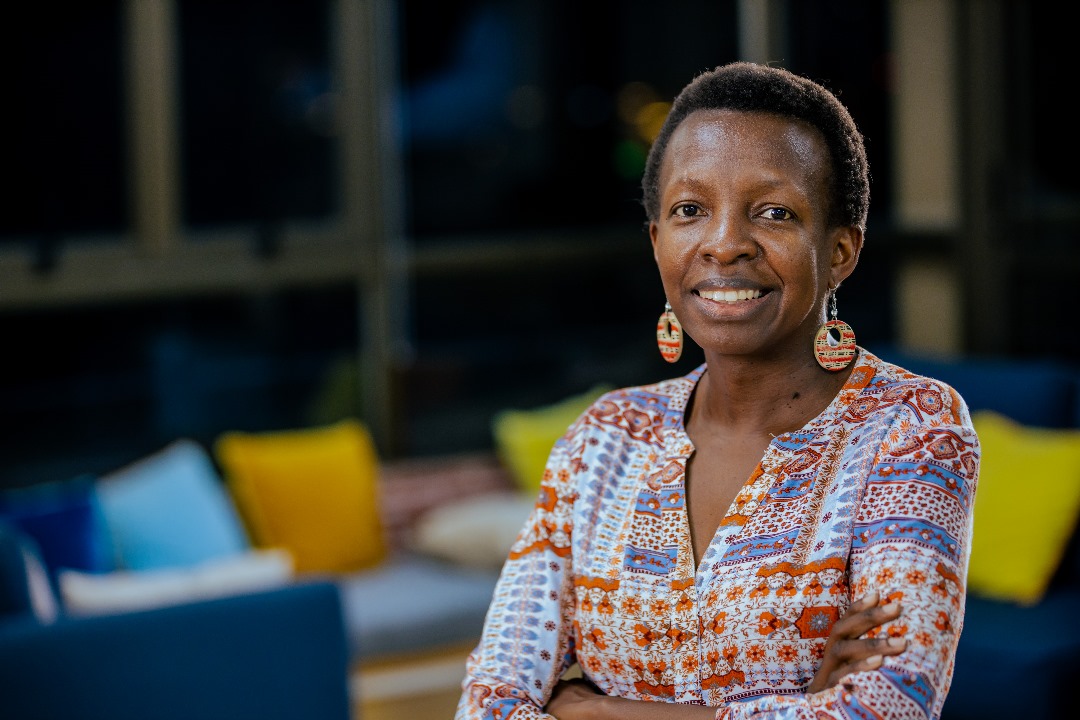
On this Writing Mountain: Why Carol Beyanga Keeps Climbing
In their book, The One Thing, Gary Keller and Jay Papasan argue that to achieve long-term life changes, choose one thing and then focus your energy on being phenomenal in that area. For Carol Beyanga, her one thing since 2003, when she entered the workforce, has been writing. She has been in the business of words as a writer, editor, and now writing coach.
Along the way, she has taken on tough roles all for the sake of making better writers, a mountain she is still climbing. In this conversation, she shares with David Kangye her experience in the newsroom and how it impacted her life. There is still more work to be done and her tour of duty in the writing world is yet to be done.
DK: Carol the writer, editor and writing coach. Which one came first for you?
CB: Editing. When I joined the Monitor, I asked Mr David Balikoowa to take me on as an editor. He introduced me to the late Kevin Aliro who gave me a desk and three months to prove myself. I did not feel I was a good writer. However, the policy was that each member of staff had to try their hand at writing and also have an idea of news reporting. I did news reporting for the first three months and I was finally allowed to edit. I was assigned to Loy Nabeta who was the features editor, as a subeditor. I decided to put up my A game. I am more of an editor than a writer because that is where my strength lies. I have had an opportunity to work with different writers. The good ones who are too lazy to put in the work. The struggling ones who need time to tell a better story among others. One thing I learned along the way is that people get better at writing when they are guided.
DK: Why Monitor and not New Vision?
CB: Actually, I started with New Vision. Immediately after completing my Bachelor’s degree, I enrolled at the University of Cardiff to pursue my Master’s. In 2001, as I was doing my research, I needed to engage Ugandan journalists to respond to my research questions. A friend at New Vision introduced me to the team who helped out. After school, I went to New Vision but only for a very short time. It was after that experience that I went to meet Mr Balikoowa at the Monitor. In a conversation with my father about the opportunity to work at the Monitor, he advised that I would have better growth opportunities there than at New Vision, which was already established.
DK: How did the journey at the Monitor start for you?
CB: Once I was confirmed as a subeditor in 2003, I was assigned the features section. I stayed in the role for two years. When Sarah Namulondo (RIP) left to pursue further studies, I was asked to step into her role as deputy features editor. In between, however, I covered business, special projects and news reporting.
DK: What were your defining moments in the newsroom?
CB: One was when I was made the full features editor in 2007, a role I did not want. The idea of managing people was not one I was ready for. Adults are difficult to manage. I was young and I had to remind these big people to do their work. Some writers were only using Monitor as an address but not putting in the work. Others wanted to be chased around. We did not have a very strong structure. It was difficult but I enjoyed it for the seven years I did it. In that period, we came up with The Sqoop edited by Henry Ssali, Seeds of Gold, and a number of such sections. We had a very hardworking team. I learnt how to teach people to improve their stories. Before that, I would take it upon myself to rewrite their stories to my satisfaction.
The other defining moment for me was when I was made the managing editor for the daily in 2014. I did not see that window open. I was happy in my role as a features editor but when Malcolm Gibson came in as an executive editor, he made several changes in the newsroom. He gave us new challenges. First, he assigned me as a special projects editor for about eight months. He wanted us to give Monitor a broad picture beyond just the politics. I took up the role at a time when the newspaper was not on good terms with the government. However, it was a wonderful time despite the tension and confusion. Several writers also left around that time. Malcolm himself did not stay for long. But I grew a tough skin within that year.
DK: What did you do after?
CB: After that, the Nation Media Group (NMG) was looking at setting up a digital desk to manage all the group’s online platforms. I took on the role of head of digital. I did that for 5 years. Then I took up the role of mentorship and partnership. We had observed a pattern of many writers who would walk into the Monitor but because they were not mentored, they would leave.
On the other hand, we wanted to help our clients grow better by utilising our services better as NMG. I did that until 2023 when I left.
DK: What propelled you to become a writing coach?
CB: I wanted to do more editing. Newspapers were good but a small portion. I wanted to work on books, reports and many other writing projects. When people learnt I had left Monitor, I got many requests from individuals who wanted to be trained in writing. I organised my first writing class, and it was a success.
DK: Two years later, how has the journey been for you?
CB: Surprisingly, beautiful. There is a need across the divide. I get many requests from professionals. People have an idea but do not know how to express themselves. There is value in what I teach. At first, I worried but I got many people who came back with positive feedback on how they were helped.
DK: We have AI and many writing prompts. Many people feel there is no need to improve their writing since they have access to the tools; isn’t that a threat to good writing?
CB: True, there is a concern. What AI cannot do now is to understand your audience. It does not capture the emotions as raw as they come. While AI helps with many tasks, it does not humanise your work. It can give you prompts but it does not know your vision of the story. It is upon you, the writer, to bring out those elements. You need to make your work unique and inviting to read.
DK: What is the future of storytelling?
CB: I am more of a text person. There are things videos and photos can do that text cannot. However, text gives you the explanation and the background. It brings you on board and you grow into the story.
For platforms like newspapers, at the time I left Monitor, we had already moved on from breaking news because social media was already doing it. It was about the depth of the story –the broader coverage. There is enough room for storytelling.
DK: Knowing what you know now, what would you have done differently in your newsroom days?
CB: I would have built a stronger team. I would have put more effort into building relationships with the team. Also, I wish I had pushed harder to get more things done.
DK: Your parting shot?
CB: The reason for journalism. The reason for journalism is to inform. People have to be informed so they can make more informed decisions. I feel like more people are joining journalism as a means to launch their careers before branching out to other fields. The more people are informed, the better decisions they make. Development happens when people are informed to do so. We always have to remember that.