
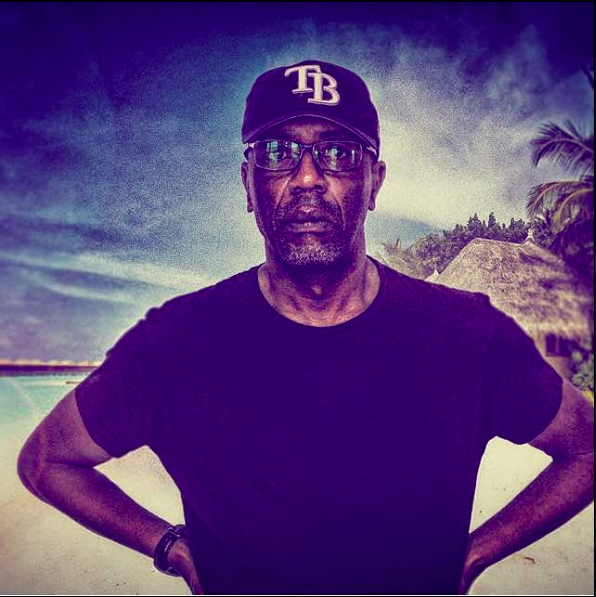
Timothy Bukumunhe: The Disruptor Who Rewrote Uganda’s Media Rules
When Timothy Bukumunhe returned to Uganda, recovering from a torn ligament, little did he know that he was here to stay. During that time, his work was published by Ugandan newspapers as a freelance writer. A conversation with his uncle, John Nagenda, later changed everything, launching his career as a columnist, radio and television host.
Mr Bukumunhe stands out as one of Uganda’s most transformative writers, a disruptor who reshaped the media landscape across print, radio, and television. TB, as he is famously known, redefined media boundaries, blending social commentary, lifestyle coverage, and satire in ways that both challenged convention and captivated audiences.
At one point in the early 2000s, he was the only media personality with a newspaper column (Have You Heard), a radio show (Desert Island Discs on 91.3 Capital FM) and Showtime Magazine on WBS TV all of which were highly sought after. With wit, edge, and unapologetic honesty, Timothy switched Uganda’s curiosity on what happens on the other side of the affluent. His ability to access high-end events and host influential people while providing candid reviews in his column endeared him to many.
After two decades of shaping stories and redefining newsroom culture, TB stepped away from the media stage. In this conversation with David Kangye, he reflects on his journey, the lessons he has learned, and the experiences that shaped him into one of Uganda’s most seasoned and influential media voices.
DK: You have left all the spaces where we knew you from. How long were you on the radio?
TB: About 10 years. And for all those years, I hosted the Desert Island Discs on 91.3 Capital FM every Sunday at 7 pm. The program was William Pike’s idea. Then, the program was a good idea to occupy people because, unlike today, people were at home on Sundays.
Secondly, not many people had DSTV. Most people had Mnet, which had only three channels. There was time to listen to the radio. There were hardly any other shows which interviewed people. Desert Island Discs started in 1998.
DK: Were you doing radio, TV and writing for a newspaper at the same time?
TB: Yes. Once, Charles Onyango Obbo told me I was the only person doing all three media at the same time.
DK: Was the work related?
TB: Radio was quite easy for me. At New Vision, I was writing a lot on the entertainment side. A few times, I would cover a business story depending on my interest. On WBS TV, I was also doing entertainment, save for a few cases.
At WBS, I started Showtime Magazine, the first lifestyle and celebrity show in Uganda.
DK: How long were you on TV?
TB: I had a love-hate relationship with Mr Wavamunno, my boss. He fired me five times and hired me five times. During my TV days, I was a young man who was all over the place. I was attending all the best parties. That did not look good for my boss. In 1999, when MTN arrived in Uganda, things changed somewhat. Erik Van Veen, the marketing manager of MTN, was more famous than the CEO. The CEO let Van Veen do his work, and that changed the trajectory of how Ugandan CEOs approached work. They started letting the young people take centre stage and shine.
DK: Fired five times? Didn’t you ever cut a wire and say you’re not going back?
TB: It happened the last time I was fired. I told him I was done. He would always give me better offers, but it wasn’t the money that mattered to me. My drive was to make people happy. I would watch the DSTV shows and borrow ideas which I would use for my show. That made it stand out.
When WBS TV opened, 99% of its staff came from the then UTV. They had a civil service attitude to work. When I came, I wanted them all fired. They did not have any innovative ideas. They did not want to work with me. However, management gave me an opportunity to find a cameraman I was comfortable working with. I later met Godfrey Kivumbi, who became my editor. Godfrey was so excited working with me because our show was dynamic. When the former UTV team saw my show, they, too, started to change.
DK: After WBS, did you consider joining another television station?
TB: There was none I could join. WBS was at the top; after that, I just concentrated on print. I started as a freelance writer for the New Vision, Monitor and the East African. One day, my uncle the late John Nagenda, invited me to his home. He suggested I join the New Vision. He introduced me to William Pike. Before that, I had approached the New Vision to run the 7 nights on Kampala streets series, but it was turned down. It was Onyango Obbo at the Monitor who took a chance on me. Monitor sold out all the copies of the street series. That was in the late 90s. Pike gave me an opportunity, and I stayed at New Vision until the COVID-19 pandemic.
DK: What was the highlight of your stay at New Vision?
TB: First of all, I am not a journalist; I am a writer. I did not go to media school. I believe one cannot be a journalist until they have gone to a journalism school. In my time at New Vision, I met many journalists from the universities around who could not write. Beginning as a freelancer and also being a writer and a society editor, I thought I had hit the mark. When I went to see Nagenda at his home, he took me to his library. Nagenda was one person you had to practise before meeting. While at his home, he gave me a lifetime lesson. He said, “If you go to a place and you do not know something, ask. Always ask.”
He then pulled out the day’s newspaper, and together we counted the different writers. About 200 of them. Then he said, “Out of all the 200, I only know five of them.” He told me, “Don’t just write to get a paycheck at the end of the day. Write to make an impact.” That stayed with me for all my time in the newsroom.
DK: That’s eye-opening. What makes a writer stand out in the newspaper?
TB: Standing out happens in three ways. One is the author. Two, is the headline. And three, is the feature image. Those three elements make the reader stop to read your story.
DK: What happens to the writers who are not sought-after?
TB: A newspaper has an X amount of space. Every writer fights to have some space. In weekend sports, for example, all sports stories fight for the back page and the two inside pages. During the highlight days in the Premier League, you are sure they will cover the entire back page; the rest of the writers have to fight for the other two pages. As a society editor, I had two pages every day. I had to look through all the stories, and I would go back to the elements above. I would look at the author, the title of the story and the feature image.
DK: Today, being a writer is not enough. You need another skill. Is this something that was pronounced in your newsroom days?
TB: Yes. It is very important. Just learn how to have some of these skills. Photoshop, Adobe and even basic photo editing skills would do. I think if I had gone to journalism school, I would be a bit constrained. I was able to express myself because I was not constrained. Many Ugandans limit themselves. They can do a lot more, but always limit themselves. People are too humble, and that holds them back from taking on opportunities. Today, the market needs someone who can adapt. Someone who can go the extra mile. As Ugandans, we play too much draughts and not too much chess. Always be on the lookout. Think.
I will give you an example. When Gaetano (Kagwa) came back to Uganda in 2003 after Big Brother, the roads were filled with people. Every media house wanted a piece of him. I found out he was staying at the Sheraton Hotel. Somehow, the entire media got to know. By the time I reached Sheraton, they were all there. The scoop had gone. But I knew the General Manager. I asked him to allow me to find Gaetano in his room, a request he granted. I went upstairs to his room and took a picture of him. When he came down to the lobby, that’s when everyone else took their picture. The following day, all media houses had the same photo of him, save for me. The media colleagues were not happy with me. You always have to be ahead of the game. Always innovate.
DK: As a society editor, you had leeway to do so much; not many people had that. Doesn’t that affect innovation?
TB: It all goes back to how you package and sell your idea to your bosses. Be like Nike, just do it and after come back and inform your boss. People lack belief in themselves. In giving out assignments, I would always be sent to the high-level events, and I later learnt that the other media guys who would go to such events would sit at the back. I, on the other hand, would always go and interact with the dignitaries. That is not something you get by keeping to yourself. Introduce yourself and interact. That’s how you learn.
DK: Do you have any regrets about things you wish you could have done in the newsroom that you didn’t do?
TB: At some point in Uganda, you can become complacent. You become Ugandanised. You may come to Uganda as an expatriate. But after a few years, you start doing things the Ugandan way – laid back and lazy. You find yourself among many of them and a few of you. I used to go to Just Kicking, a bar in Bukoto back in the day, where I would meet people who would challenge me through their conversations. It was the first bar in Kampala where you had to walk to the bar counter to place your order. Many Ugandans did not like that. They always wanted to sit back and be served.
DK: Did you ever feel Ugandanised as a writer?
TB: Yes, even now. I would be told that is not how we do things (here). People see you in a certain way when you try to question things. Not many people are real with life.
DK: What would you do differently if you were still in the newsroom?
TB: The first thing I would do is sack people and begin afresh. When I was in the media, I wrote not because I wanted fame or fortune or anything else, I wrote because I loved to write. In the process, it made me famous. We have to get people to be true to themselves. As a writer, your role is to write. Not to look for likes and all those things. Just do the work that you have to do. When other things come, treat them as a bonus.
DK: What recommendations do you have for emerging writers who want their craft to stand out?
TB: With the advent of the internet, there are so many things you can learn from. If you have the internet, you have access to a million videos to watch on YouTube. If you sit back and wait for opportunities to find you, you become another complacent Ugandan. Secondly, take counsel. It is usually given in good faith.
DK: Last word?
TB: The media as we know it is dead. Newspapers are dying. TV, too, is dying. Most freelancers are now making their own shows. When you are a freelancer and you do not send a story, you do not have money that day. Get up and show up. Your qualifications alone don’t matter in the long run. Just show up.
My father went to a village school. He ended up going to Harvard and Oxford. He became the deputy governor of the Bank of Uganda. If my father could come from that village and achieve this much, I, too, could make it. When it was my turn, I decided to show up for myself, starting as a freelance writer until I exited the newsroom as a society editor. Accolades in life are not shared. They are personal. Like a tennis player, you hustle, and the accolades are yours. The ease of life is not promised. You have to put in the work.